Deepfake Deception: Inside BlueNoroff’s AI-Driven Fileless Malware Campaign
In a sophisticated evolution of state-sponsored cyber espionage, the North Korean threat actor BlueNoroff (an affiliate of the Lazarus Group) has deployed a multi-stage attack vector specifically engineered to defraud the Web3 and cryptocurrency sectors. By blending high-fidelity AI-generated deepfakes with stealthy, memory-resident malware, the group has demonstrated an unprecedented ability to bypass traditional perimeter defenses.
Recent intelligence from Arctic Wolf has identified a targeted intrusion against a North American Web3 firm. The attackers maintained persistent access for 66 days, utilizing entirely fileless techniques to evade detection on the host machine.
The Social Engineering Loop: AI-Synthesized Meetings
The campaign initiates with highly targeted social engineering. Rather than blunt phishing, attackers use Calendly invitations featuring typo-squatted domains that mimic legitimate Zoom meeting links. Once a victim clicks, they are ushered into a fraudulent video conference designed to look indistinguishable from a standard corporate call.
The “participants” in these meetings are a masterclass in synthetic media. The threat actors utilize a complex production pipeline—involving over 950 media files—to populate the call. This includes:
- AI-Generated Portraits: Using models like ChatGPT’s GPT-4o to create realistic persona images.
- Deepfake Composites: High-fidelity videos that combine synthetic facial features with authentic, stolen body movements.
- Repurposed Media: Exfiltrated webcam footage from previous victims, reprocessed through Adobe Premiere Pro, to create “living” lures.

This impersonation often occurs via compromised Telegram accounts, where the attacker reaches out to a new prospect using the identity of a previously compromised contact, effectively leveraging “trust transfer” to increase the success rate of the meeting invitation.
Technical Deep Dive: The Fileless Execution Chain
Once the victim is engaged in the fraudulent meeting, the transition from social engineering to technical exploitation is seamless. A prompt appears within the fake meeting interface, claiming the user’s Zoom SDK is deprecated and requires an immediate update.
This is a “ClickFix” style attack. Instead of downloading an executable (which would trigger EDR/AV alerts), the victim is tricked into copying and pasting specific terminal commands. This command injects malicious PowerShell code directly into the system’s RAM.

The entire exploitation lifecycle is condensed into a highly efficient five-minute window:
- C2 Establishment: Base64-obfuscated and XOR-encrypted PowerShell downloaders establish a Command and Control (C2) beacon.
- Credential Harvesting: Browser-based stealers (targeting Chrome and Edge) use AES-encrypted shellcode to inject into legitimate browser processes. They decrypt the Login Data database via COM decryption to extract plaintext credentials.
- Session Hijacking: The malware targets Telegram sessions, allowing the actor to maintain the illusion of legitimacy for future spear-phishing attempts.
Because these operations occur entirely in-memory, they leave no traditional file footprint, making them invisible to signature-based antivirus solutions. This aligns with broader industry trends where fileless exploits account for a massive portion of successful breaches.
Infrastructure and Attribution
The scale of this operation is significant. Arctic Wolf has tracked approximately 100 victims across more than 20 countries. The targeting is surgically precise: 80% of victims work within the blockchain or cryptocurrency sectors, and 45% hold C-suite positions (CEOs and Founders). This confirms BlueNoroff’s primary objective: gaining direct access to private keys and institutional wallets.
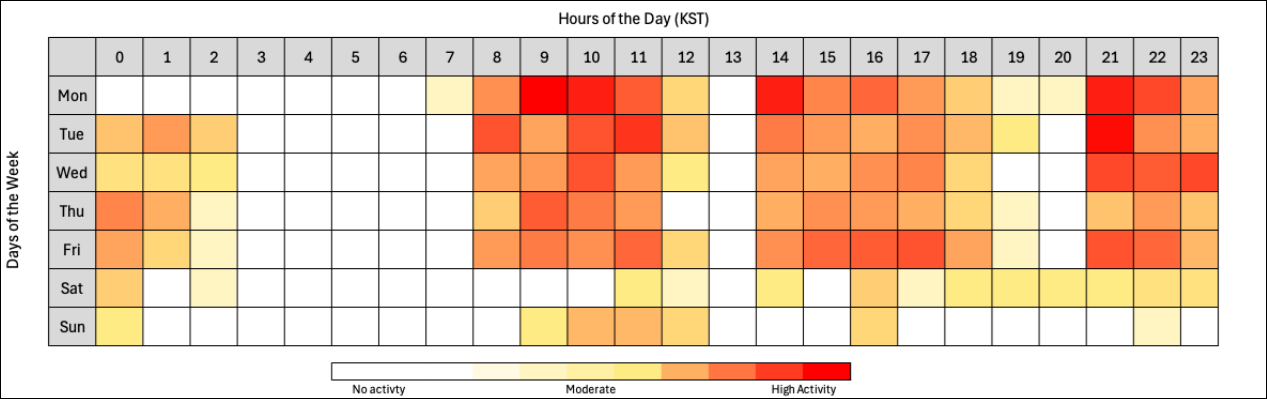
Forensic analysis of the attacker’s environment provided several “smoking guns”:
- Temporal Analysis: Operator activity aligns perfectly with North Korean business hours (08:00–18:00 KST).
- Infrastructure: Over 80 typo-squatted domains were identified, hosted on Petrosky Cloud LLC (AS400897), a hallmark of previous BlueNoroff campaigns.
- Metadata: An operator using the macOS username “king” was identified within the deepfake production environment.
Mitigation Strategies
To defend against this hybrid threat, organizations must move beyond simple file scanning and adopt a defense-in-depth posture:
- Enable PowerShell Script Block Logging: This provides visibility into the actual code being executed in memory, even if it is obfuscated.
- Restrict API Access: Limit the ability of browsers to use
getUserMediato prevent unauthorized webcam access. - Verification Protocols: Implement strict “Out-of-Band” verification. If a high-value executive receives a meeting request, it must be confirmed via a secondary, known-good communication channel (e.g., a direct phone call or a different encrypted messaging app).
- Zero Trust Architecture: Assume the endpoint is compromised and implement strict segmentation for any machine with access to cryptocurrency signing modules.