Governance vs. Security: Deconstructing the fsnotify Maintainer Dispute
A recent governance dispute within the fsnotify project—a foundational Go library—has triggered a wave of supply chain scrutiny. The controversy, sparked by the sudden removal of long-standing contributors from the project’s GitHub organization, highlights a critical vulnerability in the modern software ecosystem: the fragility of trust in “deep-stack” dependencies.
While forensic analysis has yielded no evidence of a malicious compromise or backdoor injection, the incident serves as a technical case study on how ambiguity in project ownership can mimic the early telemetry of a supply chain attack.
fsnotify is a highly critical, cross-platform filesystem notification library. It abstracts low-level kernel APIs—such as inotify on Linux, kqueue on BSD/macOS, and ReadDirectoryChangesW on Windows—into a unified Go interface. With over 10,000 GitHub stars and a dependency footprint exceeding 300,000 projects, it is a silent workhorse powering everything from CLI utilities to complex container orchestration workflows.
The friction began when prominent Go developer Yasuhiro Matsumoto (known as mattn) reported being stripped of administrative access to the GitHub organization. In an initial social media post, Matsumoto suggested that internal fractures had led to a loss of contributor autonomy, raising immediate red flags regarding potential “account takeovers” or hostile project hijacking.
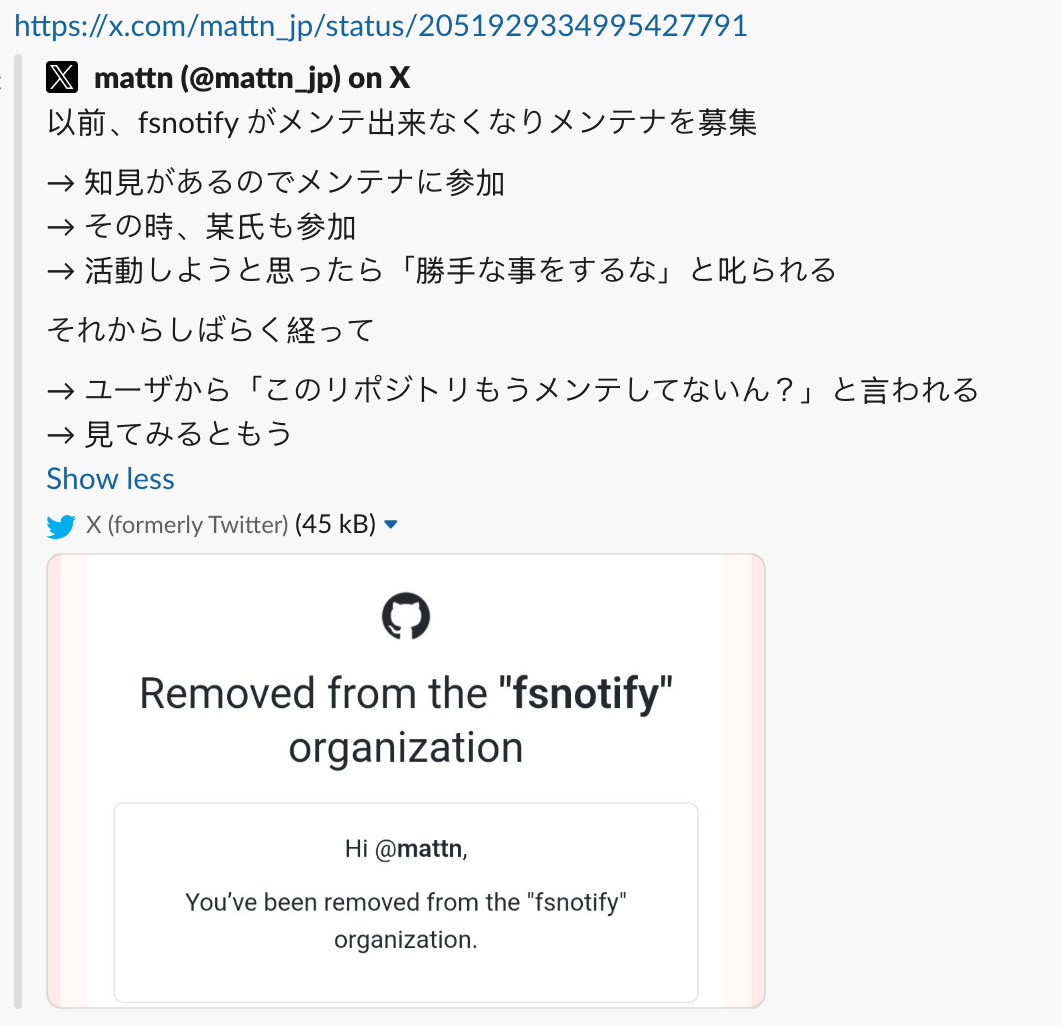
From a security operations perspective, the situation exhibited several “indicators of compromise” (IoCs) often watched by automated monitoring tools:
- Sudden Release Velocity: A long period of stasis followed by immediate, unannounced version bumps.
- Access Revocation: The sudden removal of established, trusted identities from the repository’s administrative layer.
- Governance Opacity: A lack of clear, documented protocols for code review and contributor onboarding.
Earlier in 2024, research by Socket had already flagged the project as “unmaintained” due to a prolonged lapse in release activity. This silence made the subsequent release of versions 1.10.0 and 1.10.1—intended to patch critical Linux inotify edge cases—appear suspicious to automated scanners, despite the updates being technically legitimate.
Technical Divergence: Governance vs. Security
Project maintainer Martin Tournoij (@arp242) countered the takeover narrative, characterizing the access changes as a necessary step for code quality and governance. Tournoij argued that the removals were not hostile but were instead based on the fact that certain contributors held legacy permissions without active involvement in the project’s current trajectory. He specifically cited a disagreement regarding a funding configuration update that had been pushed directly to the main branch, bypassing standard pull request (PR) review workflows.
Oshi Yamaguchi, a Staff Developer Advocate at Grafana, noted that the speed of recent merges lacked the rigorous cross-platform validation required for a library that interfaces so closely with diverse kernel subsystems. This lack of peer review creates a “blind spot” where bugs—or vulnerabilities—can slip through unnoticed.
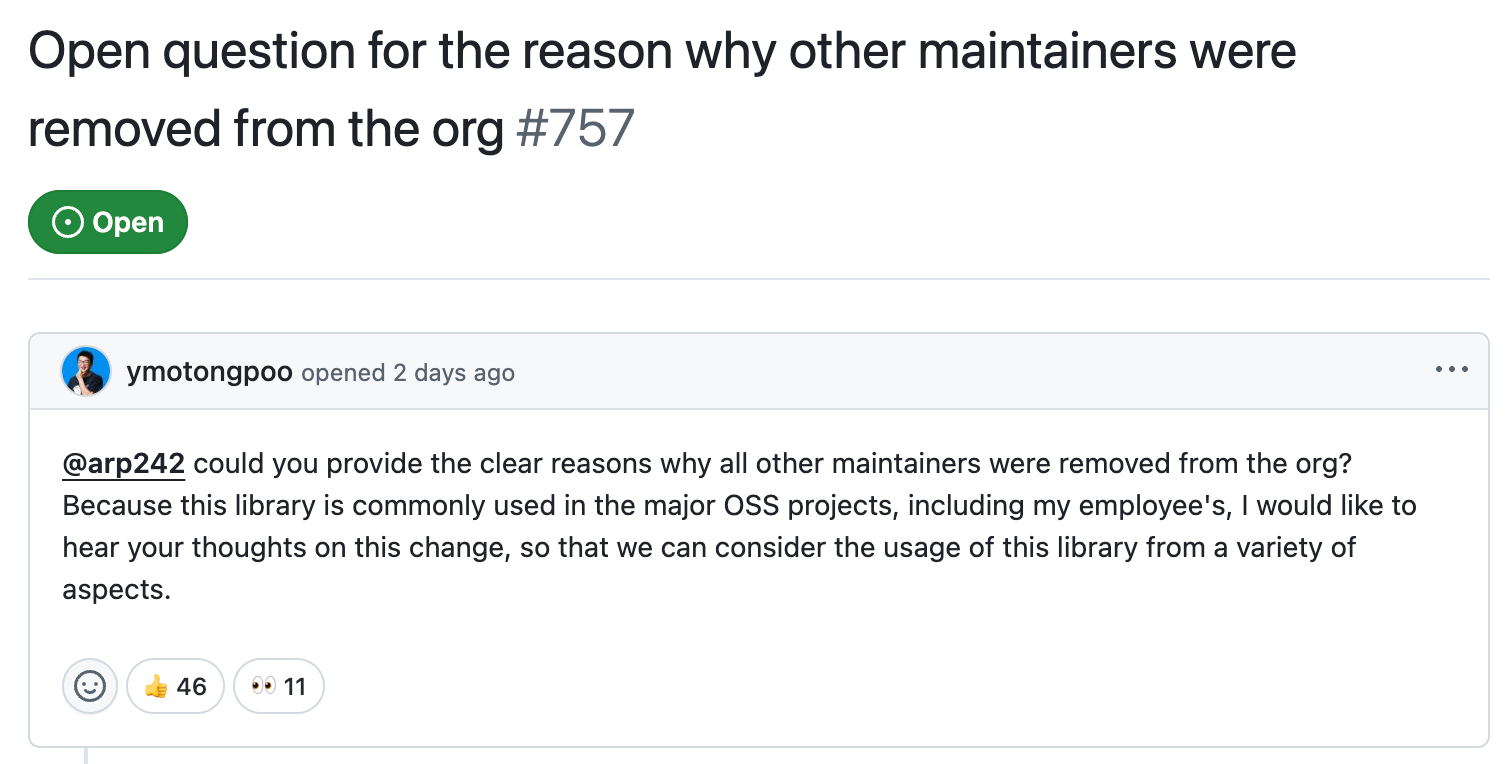
Following the initial outcry, Matsumoto apologized for any inaccuracies in his communication, clarifying that his goal was to revitalize a stagnant project. However, the damage to the “circle of trust” was already done. Downstream giants like Kubernetes began evaluating the health of the dependency, with discussions surfacing regarding the necessity of a fork. A new alternative, gofsnotify/fsnotify, has since emerged as a potential fallback for the ecosystem.
This incident mirrors the architectural lessons learned from the xz-utils backdoor, where a long-term social engineering effort exploited the inherent trust placed in individual maintainers. While the fsnotify case was a human governance dispute rather than a coordinated exploit, the technical outcome is similar: increased uncertainty in the software supply chain.
The Takeaway for DevOps and Security Engineers:
As automated tools like Dependabot make updating dependencies more seamless, they can inadvertently accelerate the adoption of potentially unstable code. For mission-critical infrastructure, the fsnotify episode underscores the need for:
- Dependency Pinning: Moving beyond “latest” tags to specific, audited versions.
- Governance Awareness: Monitoring not just for vulnerabilities, but for shifts in project leadership and review patterns.
- Fork Readiness: Maintaining the technical capacity to migrate to a community-vetted fork if a primary dependency’s governance collapses.
In an era of hyper-connectivity, the stability of your application is only as strong as the governance of its most obscure dependencies.