Inside MiningDropper: Unpacking the Sophisticated Modular Framework Targeting Android Ecosystems
In the ever-evolving landscape of mobile threats, a new player has emerged that operates less like a traditional piece of malware and more like a professional software delivery platform. Known as MiningDropper, this modular Android framework is currently being leveraged by threat actors to execute a dual-purpose mission: harvesting computational power through cryptocurrency mining and silently deploying high-impact payloads, including infostealers, banking trojans, and Remote Access Trojans (RATs).
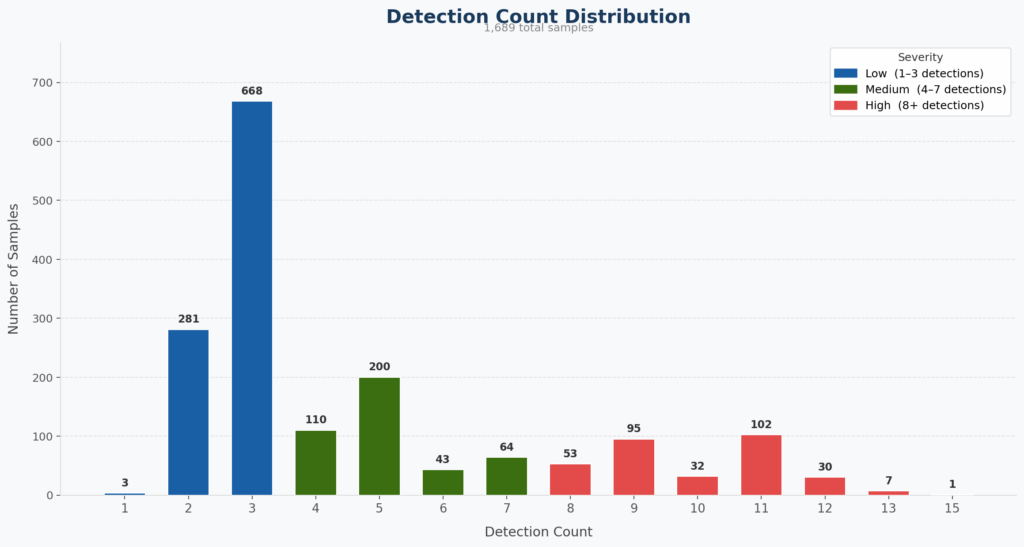
What makes MiningDropper particularly dangerous is its versatility. It isn’t hardcoded for a single objective; instead, it acts as a sophisticated delivery vehicle that can pivot between different monetization strategies depending on the target. Recent intelligence from Cyble Research and Intelligence Labs (CRIL) suggests a massive surge in activity, with telemetry identifying over 1,500 samples in the wild. Alarmingly, more than half of these samples exhibit extremely low detection rates among major antivirus engines, signaling highly effective evasion techniques.
The Delivery Vehicle: Weaponized Utility Apps
The initial infection vector often relies on social engineering. Attackers frequently take legitimate, open-source software—such as the Lumolight flashlight app—and “trojanize” it. By embedding malicious code into a familiar utility, they trick users into bypassing security warnings. These weaponized APKs are distributed through a wide array of channels, including:
- Phishing links delivered via SMS or messaging apps.
- Deceptive social media advertisements.
- Fraudulent third-party websites offering “free” productivity or streaming tools.
Deep Dive: The Multi-Stage Infection Chain
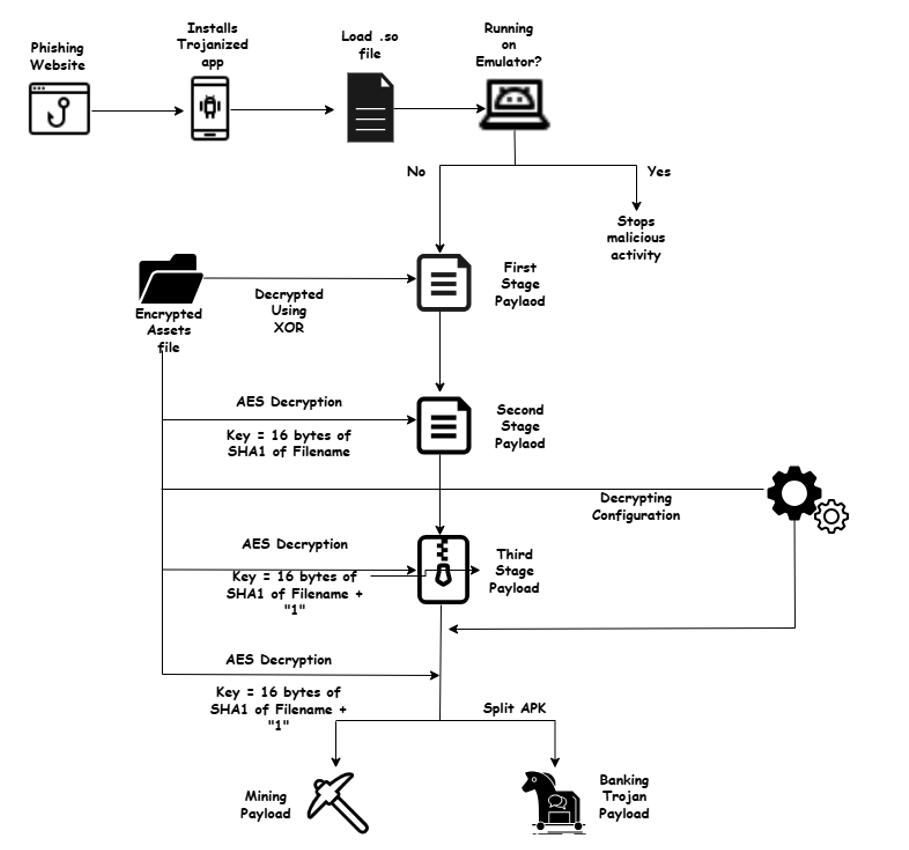
MiningDropper employs a layered architecture designed to frustrate both static analysis and dynamic sandbox environments. The execution flow is a masterclass in obfuscation:
Stage 1: Environment Validation & Native Execution
Upon installation, the trojanized app triggers a native library (librequisitionerastomous.so). This library is the framework’s first line of defense; it contains XOR-obfuscated strings and executes rigorous anti-emulation and anti-root checks. If the library detects a researcher’s sandbox or an emulated environment, the execution halts to prevent analysis.
Stage 2: The Bootstrap Loader
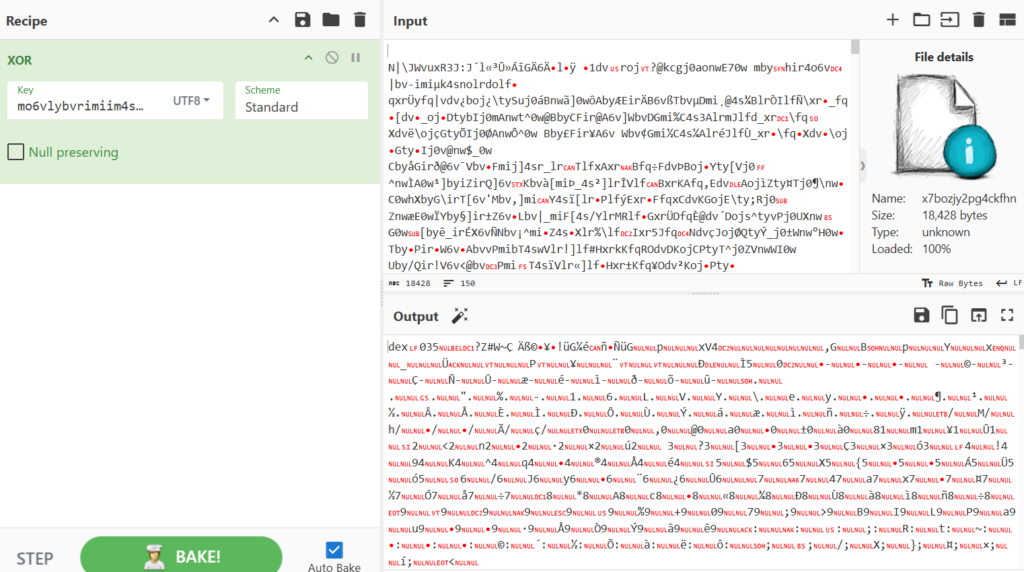
If the environment appears to be a legitimate user device, the native code decrypts a primary asset using a hardcoded XOR key. This produces a first-stage DEX (Dalvik Executable) file, which is dynamically loaded into memory via DexClassLoader. This stage acts as a “gatekeeper,” pulling a second encrypted asset and deriving an AES key based on the SHA-1 hash of the filename—a clever way to ensure decryption only works within the specific context of the infection.
Stage 3: Deception and Extraction
To prevent user suspicion, the second stage often displays a fake “Google Play Style” update screen. While the user waits for a non-existent update, the malware is working in the background, decrypting configuration files and payload archives. The final payload is often delivered as a “split-APK,” where a third-stage installer reconstructs the full malware package from multiple encrypted fragments.
Campaign Analysis and the BTMOB Threat
CRIL has identified two distinct operational clusters using this framework:
- The Information Theft Cluster: Primarily targeting users in India using lures related to Regional Transport Office (RTO) services, banking, and telecoms.
- The Global RAT Cluster: Targeting users across Europe, Latin America, and Asia, specifically deploying the BTMOB RAT.
BTMOB RAT is a highly potent payload derived from the SpySolr lineage. It grants attackers near-total control over the device, including keylogging, live screen streaming, audio recording, and the ability to perform financial fraud via web-injection and WebSocket-based Command and Control (C2) channels.
Technical Summary of MiningDropper
| Technical Aspect | Implementation Details |
|---|---|
| Architecture | Modular, multi-stage Android dropper. |
| Primary Payloads | Crypto-miners, BTMOB RAT, Banking Trojans, Infostealers. |
| Obfuscation | XOR-obfuscated strings, AES-encrypted assets (filename-derived keys). |
| Evasion Tactics | Anti-emulation/Anti-root checks, dynamic DEX loading, split-APK reconstruction. |
| Geographic Focus | India, Asia, Europe, and LATAM. |
Defensive Takeaways
MiningDropper represents a shift toward “Malware-as-a-Framework,” where the delivery mechanism is decoupled from the malicious intent. This allows attackers to swap payloads instantly without changing their core infrastructure.
For organizations and individuals, defense must move beyond simple signature-based antivirus. It is critical to:
- Avoid Sideloading: Only install applications from trusted, verified sources like the official Google Play Store.
- Implement MDM: Utilize Mobile Device Management to restrict sideloading and monitor for unauthorized configuration changes.
- Behavioral Monitoring: Prioritize security solutions that utilize behavioral analytics to detect suspicious patterns, such as unexpected dynamic code loading or unauthorized access to accessibility services.