Steganographic Stealth: Deconstructing OilRig’s Newest Cloud-Native Attack Chain
The cybersecurity landscape is witnessing a sophisticated evolution in state-sponsored espionage. APT-C-49—widely recognized by researchers as OilRig, APT34, or Helix Kitten—has deployed a highly nuanced campaign that weaponizes legitimate cloud infrastructure to mask its most critical operations. By blending LSB steganography with trusted services like Google Drive, the group has created a detection profile that is exceptionally difficult to distinguish from standard enterprise traffic.
An Iranian-linked actor active since at least 2014, OilRig has historically demonstrated a surgical focus on high-value targets within the government, energy, telecommunications, and financial sectors across the Middle East, Europe, Asia, and the United States.
The Initial Breach: Social Engineering and On-the-Fly Compilation
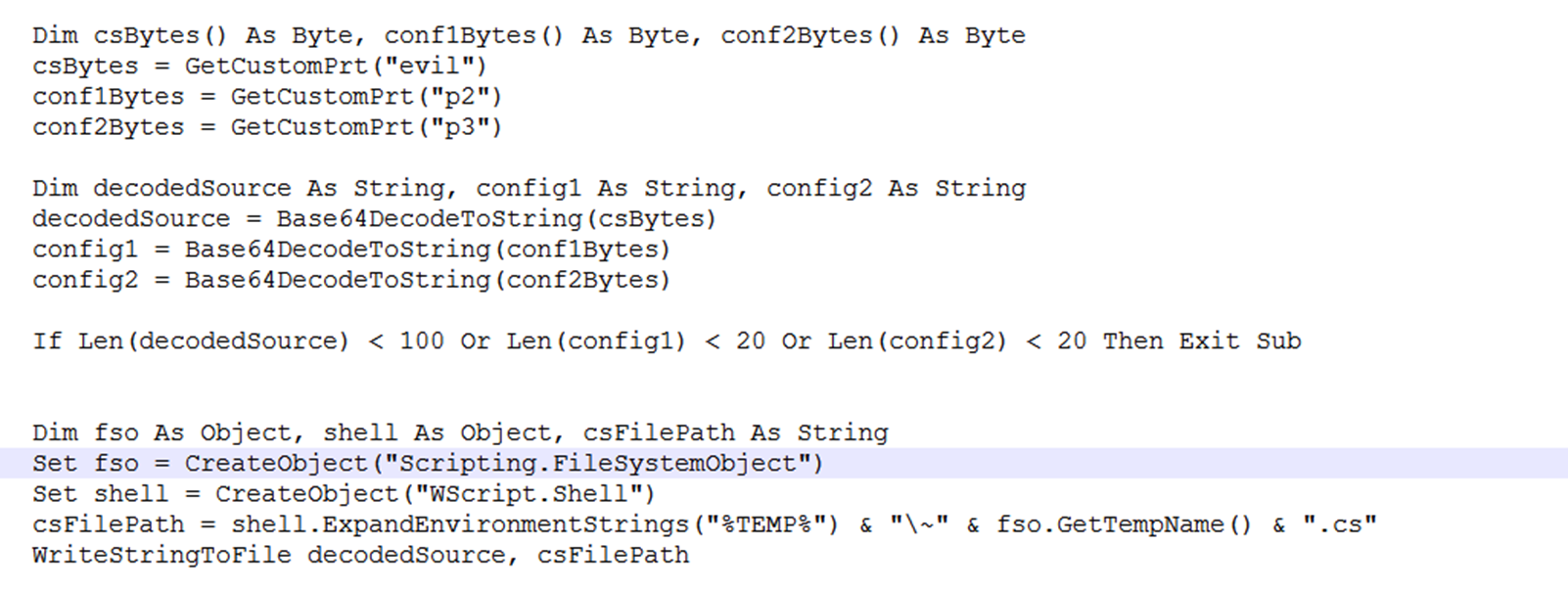
The attack vector begins with a deceptive social engineering lure: a malicious Excel document themed around sensitive geopolitical events, such as “Tehran final list.” This context is designed to exploit the urgency and curiosity of users during periods of regional unrest. Once a victim enables macros, the infection chain moves from the document layer to the system layer with remarkable speed.
Rather than deploying a pre-compiled, signature-heavy executable, the attackers utilize a “living-off-the-land” approach. The VBA code extracts encoded C# source code from CustomXMLParts and utilizes csc.exe—the legitimate Microsoft .NET Command Line Compiler—to compile the payload directly on the victim’s machine. This method of in-memory or “just-in-time” compilation is a potent technique for bypassing traditional Endpoint Detection and Response (EDR) systems, as no suspicious binary is ever written to the disk during the initial stage.
Security researchers at the 360 Advanced Threat Research Institute first identified these sophisticated samples during routine threat-hunting operations in early 2026.
The Hidden Payload: LSB Steganography via Google Drive
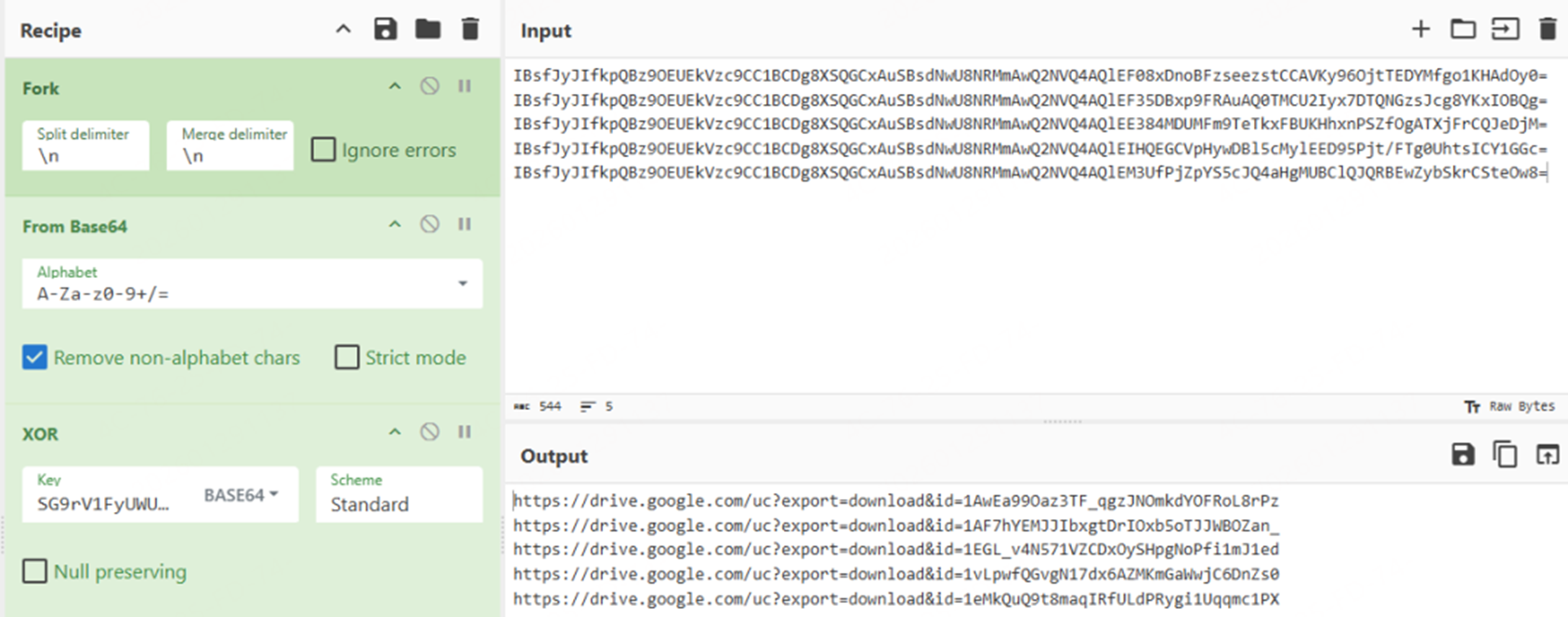
Once the initial loader is active, it reaches out to a hardcoded GitHub repository to retrieve an encoded configuration. This configuration directs the malware to a shared Google Drive link, which serves as the host for a deceptive asset: an innocuous-looking image file.
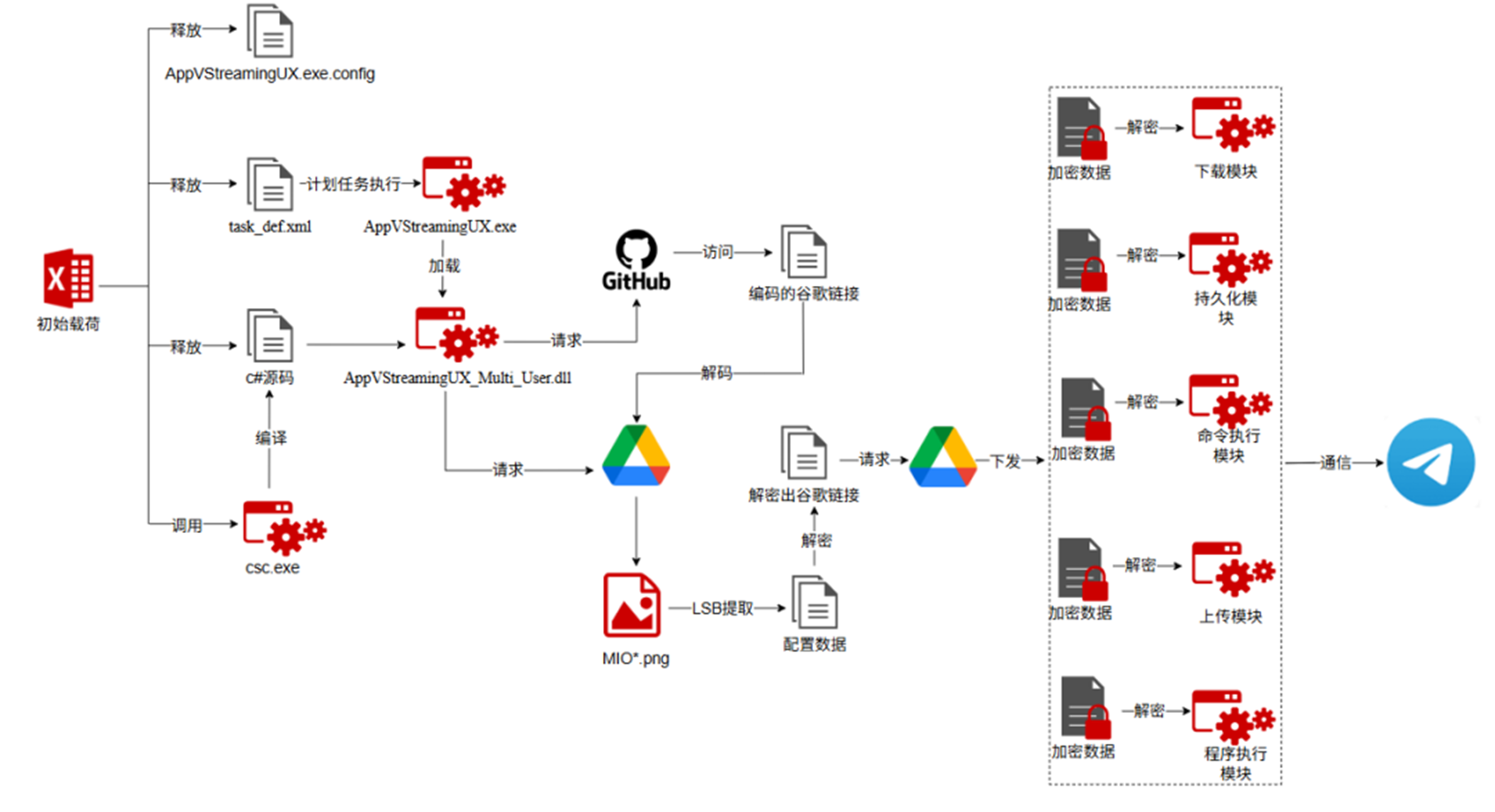
This image is a vessel for LSB (Least Significant Bit) Steganography. By subtly altering the least significant bits of the pixel data, the attackers embed encrypted configuration strings that remain invisible to the human eye and standard forensic image analysis. This technique effectively turns a common media file into a covert Command-and-Control (C2) blueprint.
The technical execution follows a precise sequence:
- Extraction: The loader utilizes a specific algorithm to pull the hidden bits from the image.
- Decoding: The extracted data undergoes a combination of Base64 decoding and XOR decryption.
- Instruction: The resulting plaintext configuration reveals the download URIs for several modular components: persistence (pr), upload (up), download (do), command execution (cm), and program execution (runApp).
Cloud-Native Command and Control
After the configuration is parsed, the malware establishes its primary C2 channel via the Telegram Bot API. This is a strategic choice; by leveraging Telegram, OilRig’s malicious traffic blends seamlessly with the legitimate HTTPS traffic generated by millions of global users, making network-level blocking extremely difficult for IT administrators.
Each functional module is loaded dynamically into memory, allowing for highly flexible operations including arbitrary DLL execution, file exfiltration, and remote command execution—all while minimizing the forensic footprint left on the host system.
Attribution and Technical Evolution
The attribution to OilRig is supported by high-confidence indicators. The attack chain mirrors historical APT34 tactics—specifically the reliance on Excel event triggers and VBA macros—but with a significant leap in technical complexity. Furthermore, forensic analysis of the source code revealed Persian-language comments, providing a strong linguistic link to Iranian developers.
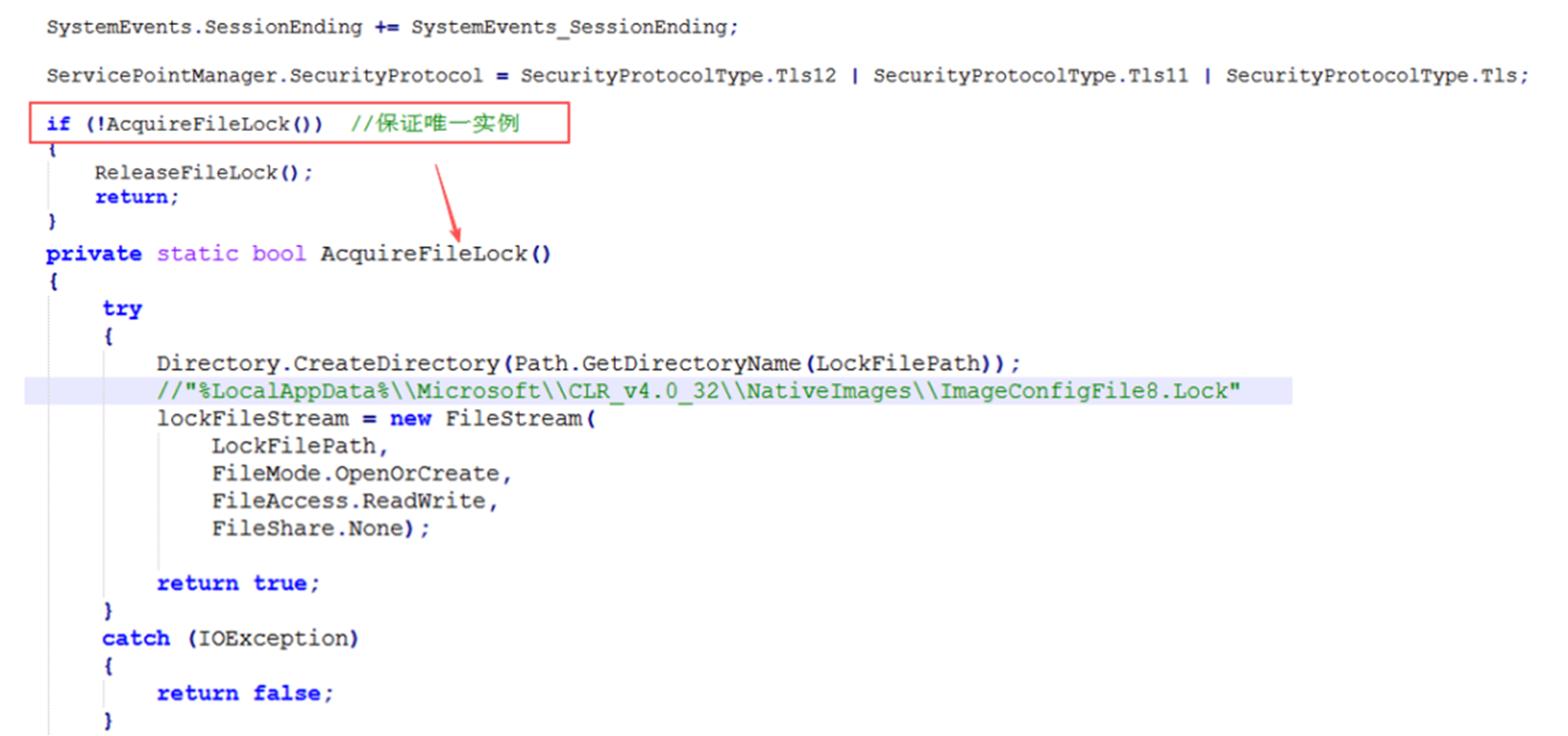
This campaign marks a fundamental shift from the group’s earlier, simpler macro-based loaders to a modular, multi-stage framework that prioritizes stealth through legitimate service abuse.
Defensive Strategies for Security Teams
To counter this level of sophistication, organizations must move beyond simple signature-based detection and adopt a behavioral-centric posture:
- Behavioral Analytics: Monitor for anomalous usage of system compilers like
csc.exeorvbc.exe, which should rarely be invoked by standard office users. - Network Traffic Inspection: Implement scrutiny on API-based communications to cloud services (Telegram, Google Drive, GitHub), specifically looking for high-frequency, low-volume data transfers that might indicate C2 heartbeat or steganographic payload retrieval.
- Macro Hardening: Enforce strict policies regarding macro-enabled documents and utilize Attack Surface Reduction (ASR) rules to block Office applications from creating child processes.