The AI Brand Paradox: Weaponizing Generative AI Hype for Social Engineering
As generative AI continues its rapid ascent in the global consciousness, threat actors are pivoting to exploit this widespread fascination. Rather than attempting to breach the highly secure infrastructures of major AI providers, attackers are weaponizing the brand equity of platforms like ChatGPT, Anthropic’s Claude, and DeepSeek. By masquerading as these trusted entities, they are executing sophisticated social engineering campaigns designed to harvest credentials, intercept payment information, and deploy advanced infostealer malware.
It is critical to distinguish these operations from actual platform breaches. These are not vulnerabilities in the AI models themselves, but rather highly optimized distribution campaigns that use AI-themed lures to increase click-through rates and psychological trust. The technical sophistication lies in the orchestration of the attack chain: combining urgency-driven messaging—such as “billing updates” or “account policy violations”—with multi-stage infrastructure designed to evade traditional perimeter defenses.
Attackers frequently utilize a “stepping stone” architecture to inflate perceived legitimacy. This includes the use of compromised CRM redirectors, legitimate URL shorteners, AWS tracking domains, and even GitHub release assets to bypass automated filters and confuse security analysts. One prevalent method involves using CAPTCHA-like gating mechanisms; these are not intended for security, but rather to frustrate automated sandbox analysis and slow down security researchers.
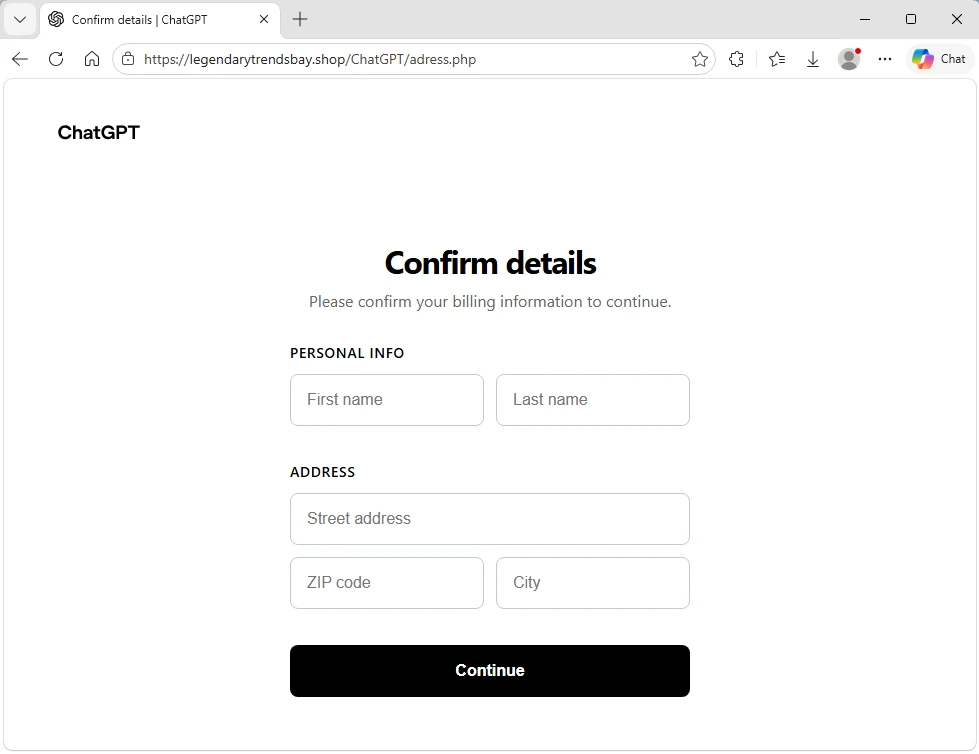
A high-volume campaign recently targeted “ChatGPT Plus” subscribers with fraudulent billing update requests. Victims were funneled through a series of legitimate redirectors before arriving at a multi-page phishing kit hosted on a compromised domain. This kit was engineered to meticulously collect PII (Personally Identifiable Information) and full credit card details. This specific campaign demonstrated significant scale, delivering tens of thousands of emails in rapid bursts, with notable geographic spikes in South Africa, Switzerland, and Austria.
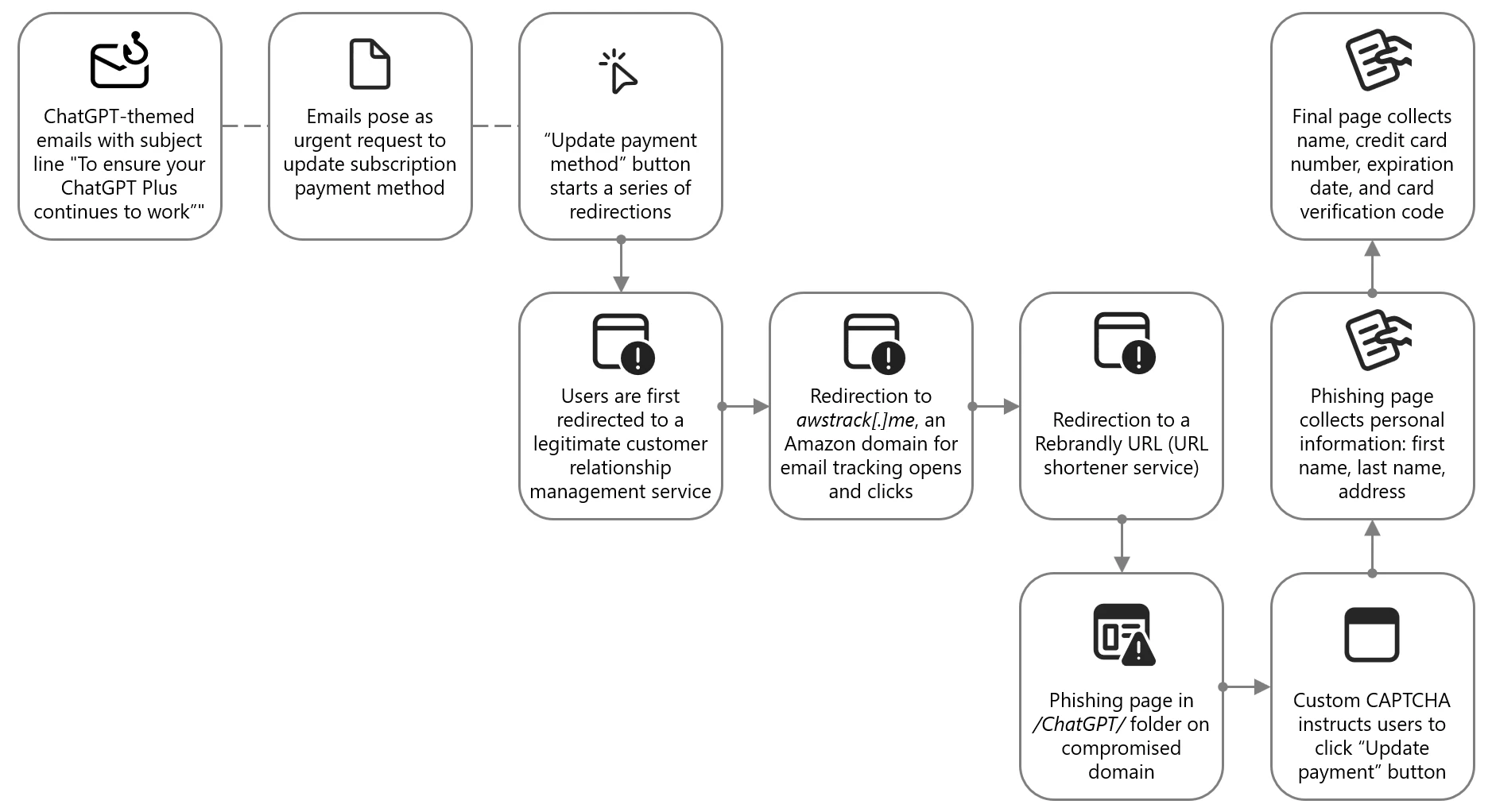
Microsoft Threat Intelligence has documented several distinct campaigns throughout 2026 that leverage SEO techniques, malvertising, and complex redirection chains to bypass modern defenses.
In another instance, attackers impersonating Claude utilized enforcement-themed PDF attachments—titled “Fill and Sign Claude Appeal Form.pdf”—to steer users toward phishing pages. These pages were often protected by Cloudflare verification to mask the underlying malicious activity, ultimately leading to an Adversary-in-the-Middle (AiTM) flow designed to intercept real-time authentication tokens.
Technical Exploitation Patterns
Malvertising has become a primary driver for scale. Specifically, threat actors attributed to Storm-3075 have been observed deploying malicious “AI plugins” via fraudulent ads on free streaming sites. These installers are particularly dangerous because they are often code-signed with fraudulently obtained certificates, providing a veneer of OS-level legitimacy. Upon execution—often following a simple user interaction like checking a box—the installers drop Python-based downloaders that fetch stealers such as Vidar.
While Microsoft and its partners have been successful in revoking these certificates and dismantling repositories, the operational efficiency remains alarming. Some campaigns have successfully infected tens of thousands of devices within a matter of hours.
The abuse of GitHub release assets has proven exceptionally effective against developers and AI researchers. Shortly after DeepSeek announced its V4 model, a malicious GitHub organization surfaced a “DeepSeek-V4” repository. The attackers utilized stolen logos, authentic benchmark tables, and SEO-optimized metadata to ensure the repository appeared in prominent search results. Users downloading the 7z release archives were actually executing loader executables that installed Vidar malware. By rotating archive hashes and maintaining consistent naming conventions, attackers can keep these lures active while successfully evading signature-based blocklists.
These trends reveal several harsh technical realities for modern defenders:
- The Blending of Tradecraft: Attackers are merging new, trending thematic lures with well-established, highly effective social engineering tactics.
- Evasion via Reputation: The abuse of reputable platforms (GitHub, CDNs, and CRM services) effectively undercuts reputation-based security models.
- The “Signing-as-a-Service” Economy: Entities like Fox Tempest provide the ability to bypass OS-level suspicion, making malware much harder to detect at the endpoint.
Defensive Strategies and Recommendations
To counter these evolving threats, organizations must shift toward an identity-centric security posture. Defenders should prioritize the following:
- Phishing-Resistant MFA: Enforce hardware-backed, phishing-resistant multi-factor authentication (such as FIDO2) across all enterprise accounts and strictly eliminate MFA exemptions.
- Time-of-Click Protection: Deploy URL analysis tools that evaluate links at the moment of interaction, rather than just at the time of email delivery, to break multi-step redirection chains.
- Endpoint and Network Defense: Utilize SmartScreen-style URL blocking and robust network protection to prevent connections to known malicious domains. Implement threat-hunting telemetry to identify unusual patterns, such as the rapid creation of SEO-optimized repositories.
- Platform Monitoring: Monitor public code-hosting platforms for the sudden appearance of repositories that use stolen branding and archive-based releases. Integrating automated takedown workflows with platform providers is essential for rapid disruption.

For deeper technical analysis, review Microsoft’s research on how threat actors operationalize AI.