The Expanding Attack Surface of CI/CD: Addressing Vulnerabilities in GitHub Actions
Modern software supply chains are increasingly reliant on automation, but this convenience comes with a significant security debt. Recent analysis reveals that 38% of organizations are operating GitHub Actions workflows that are susceptible to script injection or unsafe trigger configurations. As GitHub serves as the central nervous system for build, test, and deployment orchestration, these misconfigurations represent a critical failure point in the DevOps lifecycle.
Because these YAML-defined workflows often execute with elevated privileges—accessing sensitive source code and repository secrets—a single oversight can grant an attacker the keys to the entire production environment. Research indicates that two out of three organizations harbor at least one vulnerability within their workflows or actions, significantly widening the window of opportunity for threat actors.
Exploiting Trigger Logic: The “Pwn Request” Phenomenon
Real-world attack vectors demonstrate the sophistication of contemporary CI/CD exploitation. The s1ngularity attack, for instance, specifically targeted Nx repositories by weaponizing the pull_request_target trigger. While this trigger is designed to allow workflows to run with higher permissions to facilitate testing, it creates a dangerous trust boundary. By submitting a malicious pull request, attackers can execute arbitrary code—a technique colloquially known as a “pwn request.” This exploit succeeds because the trigger assumes the repository code is trusted, even while it processes untrusted input from external contributors.
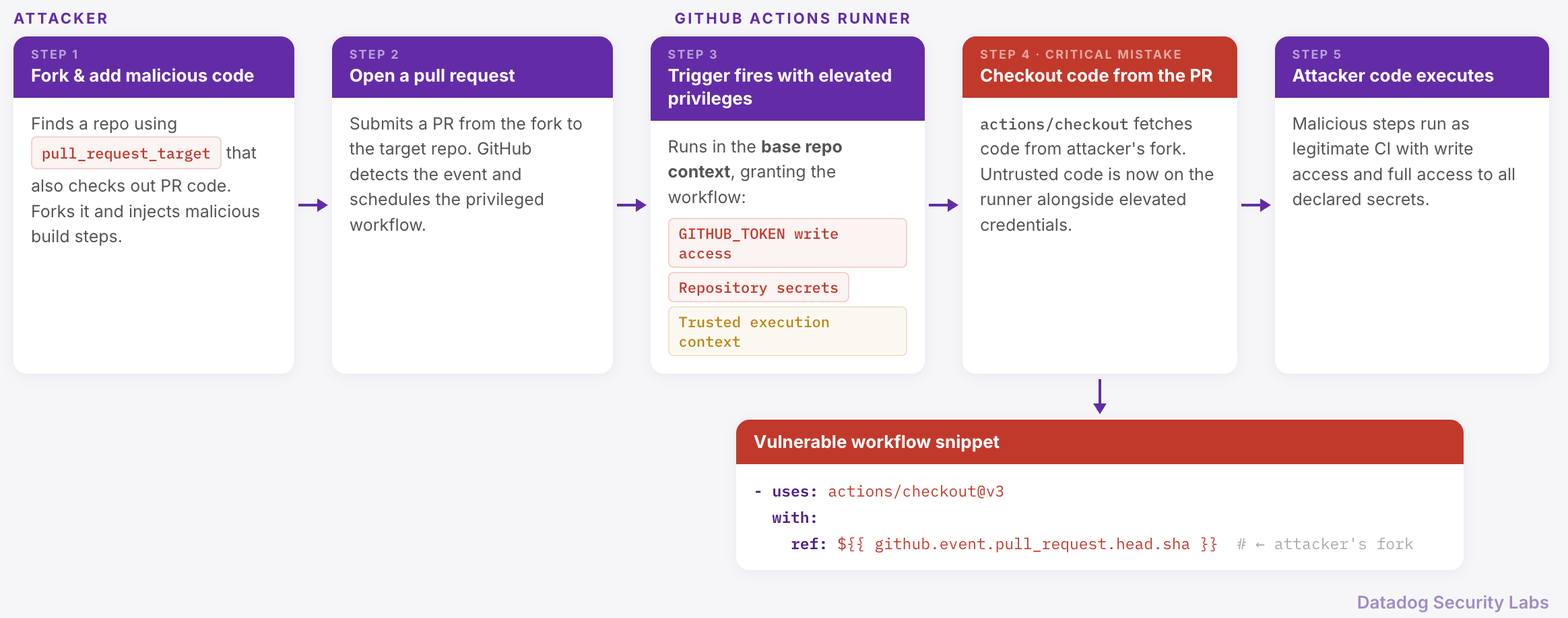
Similarly, the hackerbot-claw campaign utilized AI-driven automation to scale remote code execution (RCE) attacks. This campaign demonstrated how easily untrusted metadata can be weaponized. For example, if a workflow script takes a pull request title and inserts it directly into a shell command without sanitization, an attacker can use shell metacharacters to “break out” of the command and execute unauthorized instructions. A seemingly benign string in a PR title can thus escalate into a full pipeline compromise.
The Peril of Loose Dependency Management
Security risks extend beyond logic flaws into the realm of dependency integrity. The TeamPCP campaign highlighted how attackers can hijack the software supply chain by publishing malicious versions of widely used tools, such as Trivy and KICS. By manipulating version tags, attackers ensure that workflows referencing those tags unknowingly pull in compromised code.
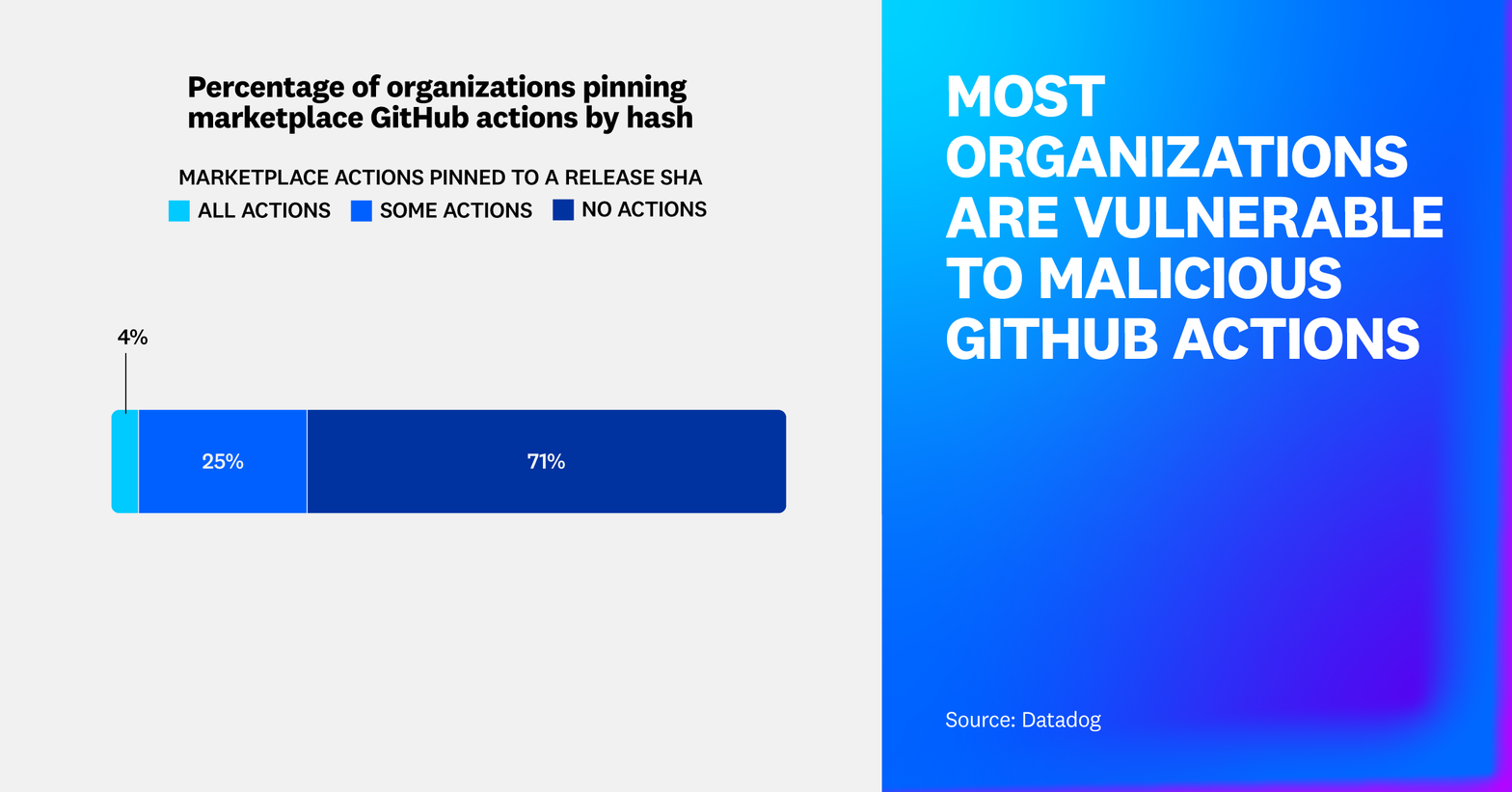
The scale of this risk is exacerbated by poor versioning hygiene: 71% of organizations fail to pin GitHub Actions to specific commit hashes. Relying on mutable version tags instead of immutable SHA hashes leaves pipelines vulnerable to “tag drifting,” where a legitimate-looking update is actually a malicious injection.
The Path Toward CI/CD Resilience
The implications of a successful breach are profound; a compromised workflow doesn’t just leak data—it can propagate backdoors into distributed software, modify build artifacts, and exfiltrate secrets across the entire organization. Datadog’s 2026 State of DevSecOps research highlights that CI/CD pipelines are now a primary target for sophisticated state-sponsored and criminal actors.
In response, GitHub is developing a multi-layered security roadmap to harden the platform:
- Deterministic Dependency Management: Implementing stricter controls to lock actions to specific commit hashes.
- Centralized Policy Enforcement: Allowing administrators to define which events can trigger specific workflows, mitigating the misuse of high-privilege triggers.
- Scoped Secrets: Restricting credential access to specific, audited workflows rather than the entire repository.
- Enhanced Observability: Utilizing the Actions Data Stream for real-time telemetry to detect anomalous execution patterns.
- Native Egress Firewalls: Monitoring and restricting outbound network traffic from runners to prevent data exfiltration.
While these platform-level improvements are vital, the onus of security remains with the developer. Organizations must treat their CI/CD configuration as a first-class application attack surface. This requires rigorous input validation, the principle of least privilege for tokens, and the mandatory use of immutable commit hashes for all third-party actions.