The Rise of Spyware-as-a-Service: How “KidsProtect” is Commercializing Digital Stalking
A sophisticated new threat is emerging in the Android ecosystem, signaling a dangerous shift in how surveillance malware is distributed. Cybersecurity researchers have uncovered a platform known as “KidsProtect,” which moves beyond being a simple malicious tool to functioning as a full-scale “Spyware-as-a-Service” (SaaS) model. This platform allows bad actors to not only deploy surveillance but to rebrand and resell the software as their own proprietary product.
By offering a turnkey solution, KidsProtect enables low-skill operators to launch their own bespoke spyware enterprises. This lowers the barrier to entry for digital stalking, turning invasive surveillance into a scalable, franchise-style business model.
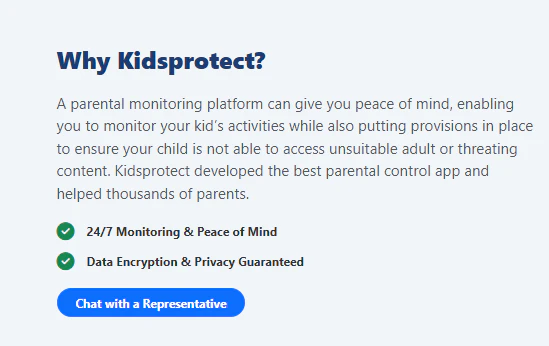
To mask its true intent, the platform employs a classic “wolf in sheep’s clothing” tactic. It markets itself under the guise of a parental monitoring application—a common strategy within the stalkerware ecosystem. By framing highly invasive features as “child safety tools,” the developers attempt to bypass the scrutiny of regulators and provide a veneer of legitimacy to victims.
However, the technical reality tells a different story. On underground hacking forums, the tool is advertised with a focus on “Stability & Stealth,” targeting users who require covert access rather than parental oversight. Researchers at Certo have identified this platform, noting that its architecture is specifically designed for high-volume resale.
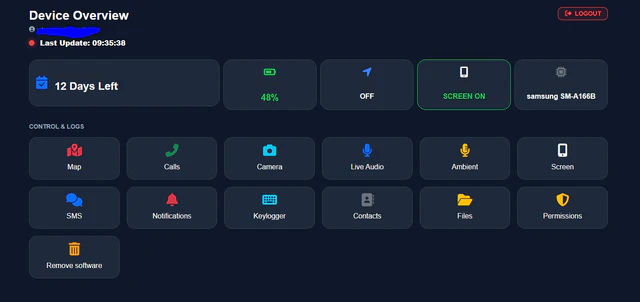
Through a centralized web-based dashboard, an operator can exert near-total control over a target device. The platform’s capabilities include real-time microphone streaming, live GPS tracking, SMS interception, and the ability to read encrypted messaging notifications from platforms like WhatsApp and Viber. Furthermore, it includes a robust keylogger to capture credentials and sensitive inputs.
The pricing structure is intentionally accessible, starting at approximately $60, with a premium “white-label” tier that provides the complete source code or branded binaries for resellers.
Technical Deep Dive: Surveillance and Persistence Mechanisms
Once the KidsProtect APK is successfully installed, it transitions into a silent background process. The technical sophistication of the malware lies in its ability to maintain persistence and evade both user detection and system-level security protocols.
Core Surveillance Capabilities:
- Audio/Visual Interception: Real-time microphone streaming, call recording, and remote access to both front and rear cameras.
- Data Exfiltration: Full access to contacts, media galleries, and stored file systems.
- Live Interaction: Real-time screen monitoring and keystroke logging (keylogging) to bypass traditional privacy boundaries.
- Location Intelligence: Continuous GPS tracking with live updates.
From a technical standpoint, the malware relies heavily on the abuse of Android’s permission model. Most notably, it exploits the Accessibility Service. While originally designed to assist users with disabilities, this service allows an application to “read” the screen content and interact with other apps, making it a goldmine for intercepting messages and stealing login credentials in real-time.
To ensure the malware remains on the device, KidsProtect employs several advanced evasion techniques:
- Masquerading: The app renames its process to “WiFi Service” to blend in with native Android system components.
- Device Administrator Privileges: By registering as a Device Administrator, the app prevents the user from performing a standard uninstallation.
- Anti-Uninstall Logic: Built-in protections ensure that the application cannot be removed without the attacker’s specific authorization.
- Boot Persistence: A
BootReceivercomponent is utilized to ensure the spyware automatically restarts whenever the device is rebooted. - Security Disablement: The installation process explicitly instructs users to disable Google Play Protect to bypass signature scanning.

The Scalability Crisis: A Reseller Ecosystem
The most alarming evolution presented by KidsProtect is the decentralization of the threat. The white-label model effectively turns malware into a franchise. Even as law enforcement and cybersecurity firms successfully dismantle specific stalkerware providers, the underlying “engine” remains available for others to wrap in new branding and relaunch.
This “hydra-like” capability threatens to undermine recent legal successes against surveillance companies. When the core technology is sold as a service, the ecosystem can regenerate almost instantly, with new “brands” appearing as soon as old ones are flagged by authorities.

Technical indicators suggest the spyware operates under the package name com.example.parentguard and is compatible with Android 7 and higher. Due to its use of cleartext traffic in certain modules, there is an increased risk of data exposure not just to the attacker, but to third-party interceptors on the network.
In conclusion, KidsProtect represents a paradigm shift. We are no longer just looking at individual malicious apps, but at a highly scalable, commercialized infrastructure designed to facilitate widespread digital abuse with minimal technical expertise required by the end-user.