The Silent Observer: How Malicious Browser Extensions Are Exfiltrating Generative AI Conversations
A sophisticated wave of malicious browser add-ons is actively targeting users of leading generative AI platforms, including ChatGPT, Claude, Copilot, Gemini, and DeepSeek. These extensions are designed to harvest highly sensitive conversational data and personal identifiers, turning the convenience of browser-based AI into a significant privacy liability.
The threat landscape relies on “social engineering through utility.” Attackers deploy ostensibly helpful tools—such as VPNs, sidebars, and “AI assistants”—to gain the necessary permissions to intercept agentic-AI interactions. Once active, these extensions exfiltrate chat histories and aggregate the proprietary information users routinely share with large language models (LLMs).
Technical analysis reveals a standardized operational lifecycle for these malicious payloads. Upon installation, the extension monitors the browser’s navigation history for visits to targeted AI domains. Once a match is detected, the extension injects JavaScript into the page or within iframes to capture DOM-rendered chat content and session identifiers. The collected data is typically encoded—often using Base64 encoding—to bypass simple string-based detection before being transmitted to attacker-controlled Command and Control (C2) endpoints.
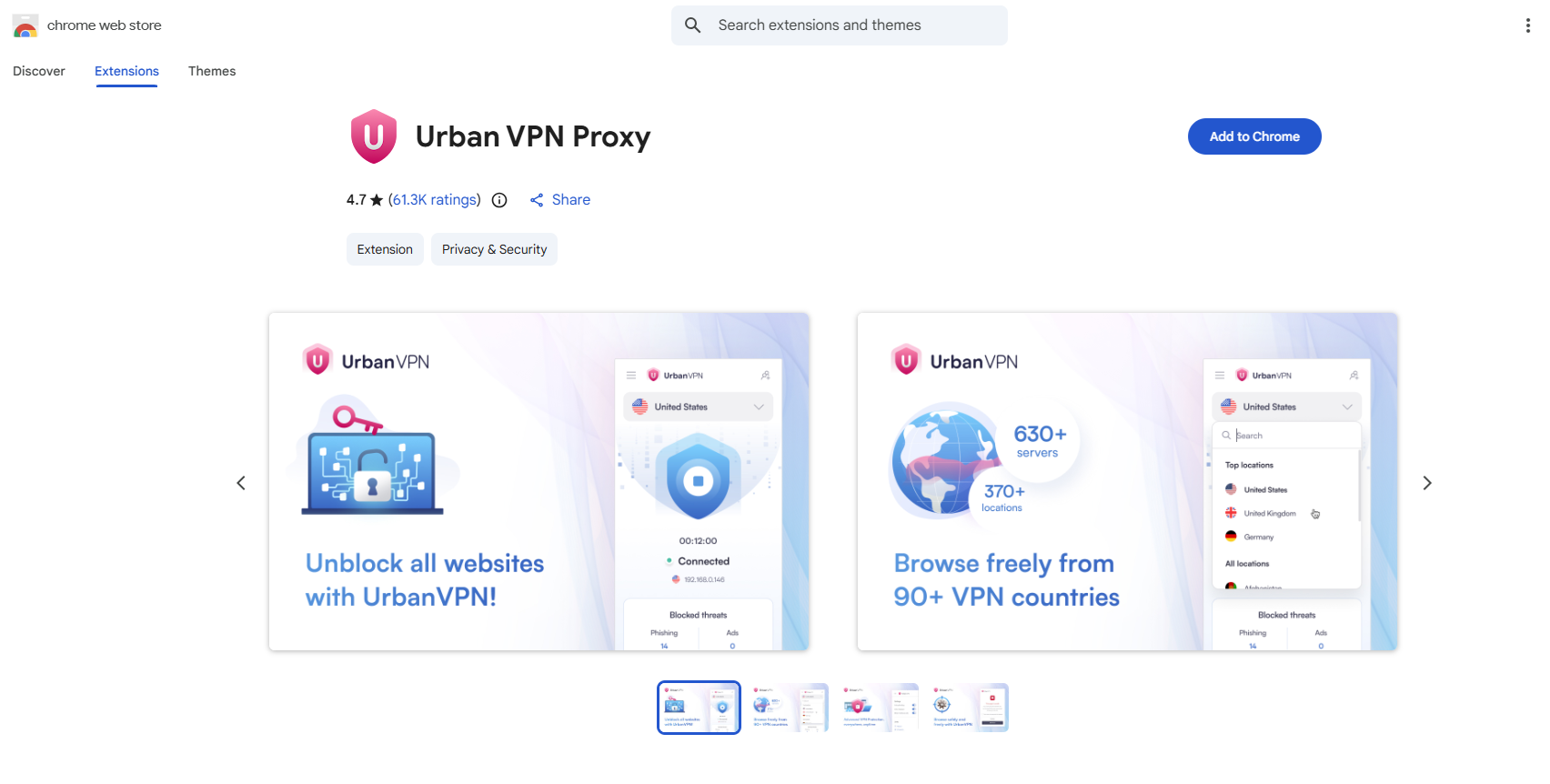
A prominent example is Urban VPN. Despite being marketed as a privacy-centric service, researchers discovered a malicious content.js file within its package. This script actively watched for user access to ChatGPT, Claude, Copilot, DeepSeek, Gemini, Grok, Meta AI, and Perplexity, intercepting network flows regardless of whether the VPN tunnel was currently active.
Another notable threat, Smart Sidebar: ChatGPT, Claude & DeepSeek, utilized a sophisticated DOM watcher paired with a completion-trigger selector. This allowed the extension to extract the most recent user prompt and the subsequent model response, storing the data via the chrome.storage API before periodically batching and posting the logs to a third-party URL.
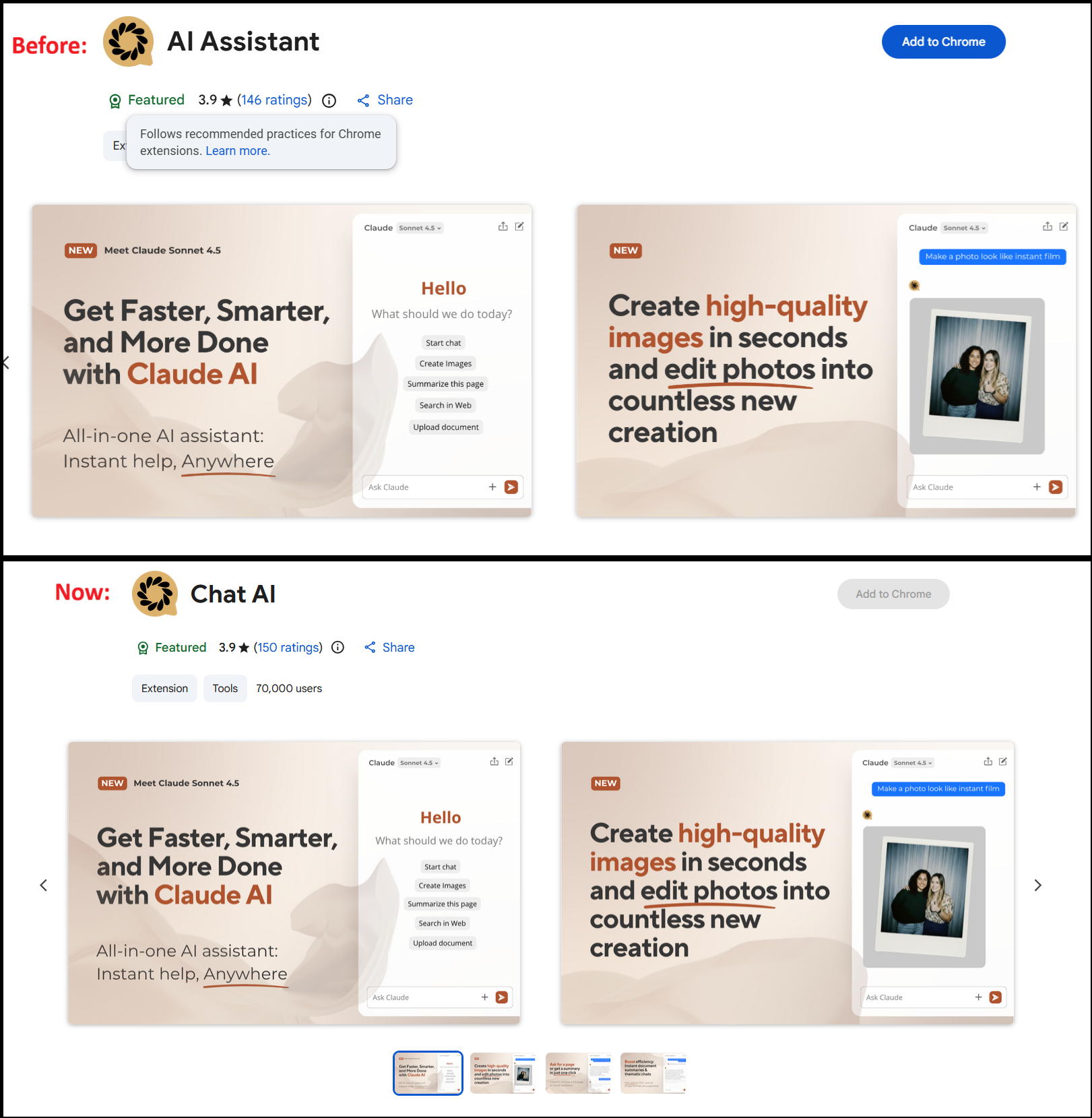
Furthermore, some “AI Assistant” extensions leverage remote chat iframes. By using the postMessage API to exchange content with external infrastructure, they create secondary exfiltration vectors, allowing hostile remote endpoints to pull data directly from the browser context.
Technical Vectors: Interception and Stealth
Two core technical patterns emerge across these malicious builds:
- Content Interception: Injected scripts either override standard
fetchorXHRfunctions to capture API traffic or monitor DOM mutations to scrape fully rendered messages. This allows attackers to capture not just text, but metadata such as unique chat IDs, timestamps, and conversational arrays. - Stealth Persistence: To evade detection by automated sandboxes and manual audits, collected data is buffered locally and transmitted opportunistically. Furthermore, attackers employ “masquerading” techniques, naming directories and resource paths to mimic legitimate development projects or popular AI frameworks.
An in-depth report by GData notes that attackers are increasingly leveraging the standard Chrome extension lifecycle—including background scripts and messaging APIs—to blend seamlessly with legitimate extension behavior.
The Impact: From Espionage to Extortion
The risk is material and immediate. Users frequently input personal health data, financial details, intellectual property, and confidential corporate intelligence into AI tools. For enterprises, the exfiltration of source code snippets or project roadmaps can lead to massive compliance violations and the loss of competitive advantage.
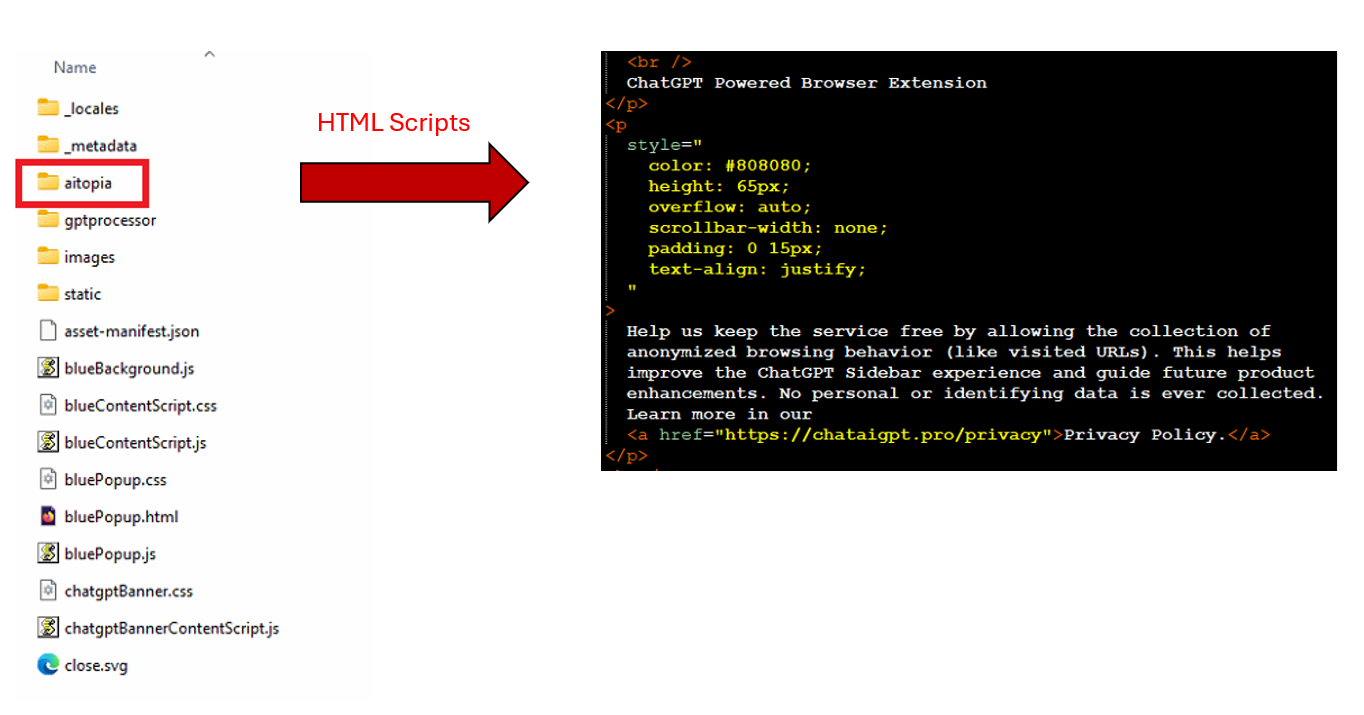
The directory structure of AITOPIA AI serves as a case study in deception, utilizing naming conventions designed to imitate established, “all-in-one” AI assistant platforms to lower user suspicion.
Intercepted data is a high-value commodity for weaponization, including:
- Corporate Espionage: Stealing proprietary workflows and data.
- Extortion: Using sensitive personal or corporate disclosures for blackmail.
- Account Takeover: Utilizing session identifiers to hijack active AI sessions.
Defense-in-Depth and Mitigation Strategies
Securing the AI-human interaction requires a layered defense strategy:
For Individual Users
Users should conduct regular audits of their installed extensions, removing any add-ons with low reputation or unnecessary permissions. It is critical to validate the “Permissions” requested by an extension; avoid any tool that requests broad “read and change all your data on all websites” access unless absolutely necessary for its core function.
For Enterprise Security Teams
Organizations should move toward an Allowlist model for browser extensions via Group Policy (GPO) or MDM solutions. Security teams should enforce the installation of extensions only from managed, vetted sources and utilize browser telemetry to identify anomalous POST requests to uncharacterized external domains.
For Network Defenders
Monitor outbound network traffic for suspicious patterns, such as repetitive POST requests containing Base64-encoded payloads directed at unknown endpoints immediately following interaction with known AI domains.
Long-term remediation requires platform-level improvements. Browser vendors must implement more granular permission models, while AI service providers should enhance Content Security Policies (CSP) and stricter CORS rules to prevent third-party scripts from accessing the conversational DOM nodes. Until these structural safeguards are ubiquitous, browser extensions must be treated as a high-risk attack surface.