Webhook Exploitation at Scale: n8n Infrastructure Abuse Surges 686% in Phishing Campaigns
A sophisticated threat campaign has emerged targeting agentic AI-driven workflow automation platforms, particularly n8n, to facilitate the delivery of malicious payloads and conduct systematic device fingerprinting operations. This abuse pattern represents a novel attack vector that leverages the inherent trust and accessibility of legitimate automation infrastructure to establish covert command-and-control channels and execute multi-stage attack chains.
During the observation period spanning October 2025 through March 2026, security analysts at Cisco Talos documented a marked escalation in phishing email campaigns that weaponized n8n-generated webhook endpoints to distribute malware binaries and aggregate device-specific fingerprint data, all while maintaining the appearance of legitimate infrastructure communications originating from trusted domains.
Architecture and Attack Surface of AI Workflow Automation Platforms
Contemporary AI workflow automation platforms—including n8n, Zapier, and similar solutions—are architected to facilitate asynchronous task orchestration and inter-application communication across diverse SaaS ecosystems. These platforms typically integrate with messaging services (Slack, Microsoft Teams), productivity applications (Google Workspace, Microsoft 365), data repositories (Google Sheets, Airtable), and large language models (OpenAI’s GPT-4, Anthropic’s Claude). The abstraction of complex API interactions into visual workflow builders has accelerated enterprise adoption while simultaneously introducing novel attack surfaces.
n8n specifically provides customizable workflow hosting with webhook functionality accessible through unique subdomain registrations operating under the tti.app.n8n[.]cloud namespace. These URL-based webhooks function as HTTP endpoints designed to receive POST/GET requests from external applications, triggering subsequent workflow steps and returning HTTP response data streams. The architectural design prioritizes ease of deployment and universal accessibility, characteristics that inadvertently facilitate abuse by threat actors seeking to obfuscate malicious infrastructure.
Multi-Stage Malware Delivery via Webhook-Based Infrastructure
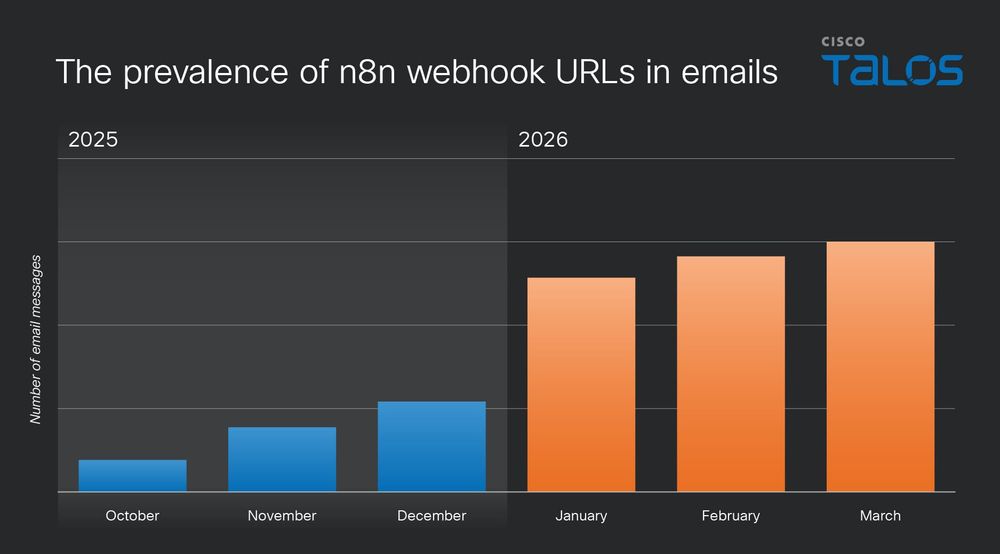
Threat actors have operationalized n8n webhook functionality as a delivery mechanism for multi-stage attack chains. Cisco Talos documented a 686% increase in phishing emails containing n8n-hosted webhook links between January 2025 and March 2026. The operational effectiveness of this approach derives from several technical factors: webhook endpoints dynamically serve differentiated payloads based on HTTP request metadata (specifically User-Agent headers, IP geolocation, and temporal parameters), enabling adversaries to implement sophisticated social engineering tactics tailored to individual targets. Additionally, the payload origin is obfuscated, appearing to originate from the legitimized n8n.io domain rather than attacker-controlled infrastructure.
OneDrive Impersonation Attack Chain: Datto RMM Deployment
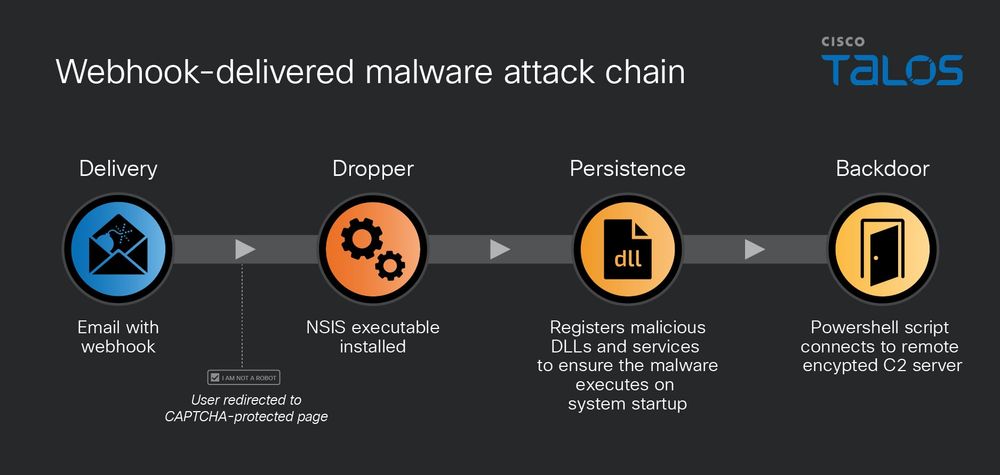
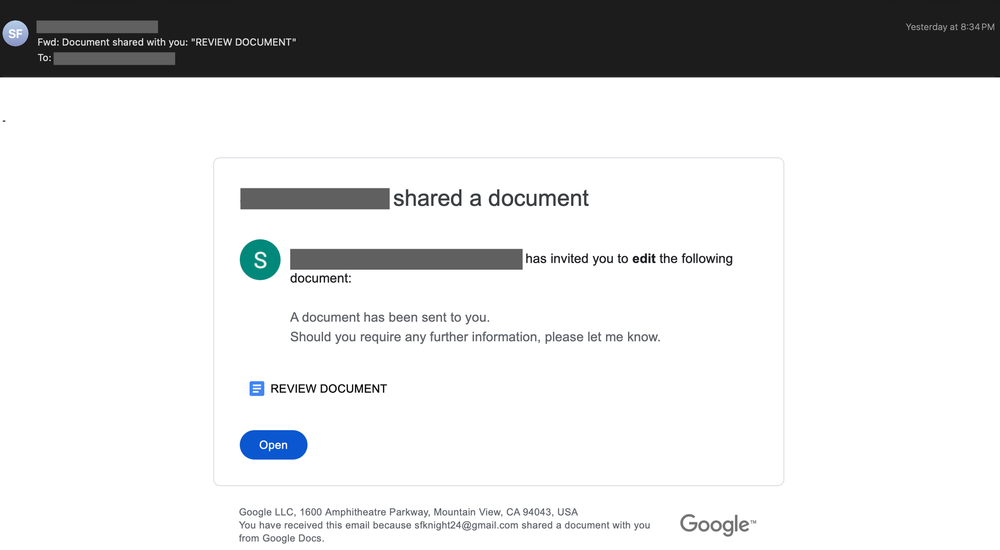
A representative attack chain identified by Talos employed phishing emails masquerading as Microsoft OneDrive folder-sharing notifications. Upon recipient interaction with the embedded webhook URL, a dynamically-rendered phishing page displayed a CAPTCHA verification interface—a social engineering mechanism designed to create the appearance of legitimate security validation. Following CAPTCHA completion, the victim’s browser initiated download of a malicious executable file designated “DownloadedOneDriveDocument.exe”.
Binary analysis revealed the executable to function as a staged loader deploying a modified instance of the Datto Remote Monitoring and Management (RMM) tool. The malware established persistence through Windows scheduled task registration and initiated command-and-control communication channels via legitimate Datto relay infrastructure, effectively spoofing legitimate remote administration traffic patterns.
Armadillo-Packed ITarian RMM Variant Campaign
A complementary campaign variant employed an MSI (Microsoft Installer) executable protected by the Armadillo code obfuscation and packing framework. The installer artifact impersonated OneDrive “Document Reader” functionality to establish social engineering credibility. Upon execution, the installer payload performed the following sequential operations: (1) deployed a weaponized ITarian RMM agent—a legitimate remote management tool repurposed for malicious control, (2) conducted exfiltration of sensitive system telemetry using embedded Python modules, and (3) rendered a spoofed progress bar displaying a contrived installation failure notification to maintain victim deception and minimize behavioral anomaly detection.
Device Fingerprinting via Transparent Pixel Tracking and n8n Webhook Exfiltration
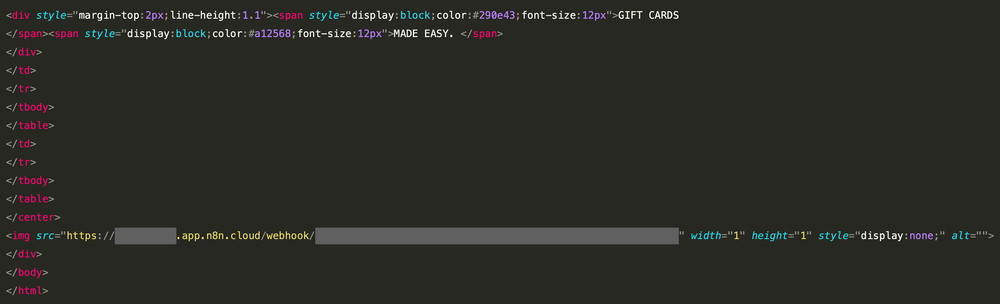
Beyond malware delivery, Cisco Talos identified coordinated campaigns leveraging n8n infrastructure for passive device fingerprinting and email open tracking. This technique employs steganographic embedding of 1×1-pixel transparent image elements within phishing email message bodies. When email clients render the HTML content, these pixel elements trigger HTTP GET requests directed to n8n webhook URLs containing encoded metadata parameters such as recipient email addresses, temporal activation timestamps, and system-level identifiers.
The operational methodology provides threat actors with several intelligence collection capabilities: (1) definitive confirmation of email delivery and rendering, (2) temporal profiling of victim engagement patterns, (3) device and browser fingerprinting data facilitating targeted exploitation, and (4) geographic and network infrastructure characterization enabling refinement of subsequent social engineering operations.
Detection, Mitigation, and Defense Strategy Recommendations
The identification of this threat campaign establishes that legitimate automation platforms present inherent security risks when deployed without comprehensive monitoring and access controls. Cisco Talos recommends the following technical controls and operational procedures:
Email Security Enhancement: Implement advanced email gateway filtering with specific detection rules for n8n webhook URL patterns and transparent pixel tracking mechanisms. Deploy sandboxing technologies to detonate suspicious HTML content and identify dynamic payload delivery sequences.
Network-Level Monitoring: Institute network traffic analysis with particular attention to outbound HTTPS connections to n8n.cloud subdomains, Datto relay infrastructure, and ITarian command-and-control servers. Establish DNS sinkholing for known malicious webhook domains.
Endpoint Detection and Response (EDR): Configure EDR platforms to monitor for scheduled task creation, RMM tool installation, and Python module execution in suspicious contexts. Implement behavioral analysis to identify multi-stage loader patterns and process hollowing techniques.
User Awareness and Training: Conduct targeted security awareness training emphasizing the risks of opening attachments or clicking links from unsolicited OneDrive-related notifications. Establish verification procedures for legitimate infrastructure communications.
Platform Access Controls: Organizations utilizing n8n and similar platforms should implement strict webhook URL whitelisting, audit logging of all webhook invocations, and principle-of-least-privilege access models for workflow creation and modification permissions.
This campaign exemplifies the adversarial co-evolution of attack methodologies alongside the adoption of legitimate security and automation technologies. As agentic AI platforms become increasingly integral to enterprise operations, their potential weaponization as attack infrastructure requires elevated security posture and continuous threat monitoring.