LOTUSLITE: How Mustang Panda is Weaponizing Trusted Binaries Against the Banking Sector
In a sophisticated display of “living off the land” tradecraft, threat actors are increasingly leveraging Microsoft-signed developer tools to mask the deployment of a new backdoor variant.
Researchers have identified a fresh iteration of the LOTUSLITE malware, specifically targeting India’s financial infrastructure. Based on architectural overlaps and infrastructure patterns, there is moderate confidence linking this activity to the Mustang Panda espionage cluster, a China-nexus group known for strategic intelligence gathering.
Unlike typical ransomware that prioritizes immediate financial extortion, this LOTUSLITE v1.1 variant maintains a disciplined espionage profile. Its primary objectives are long-term persistence and stealth, offering capabilities such as remote shell access, comprehensive file system operations, and granular session management—all designed to facilitate quiet data exfiltration rather than loud monetization.
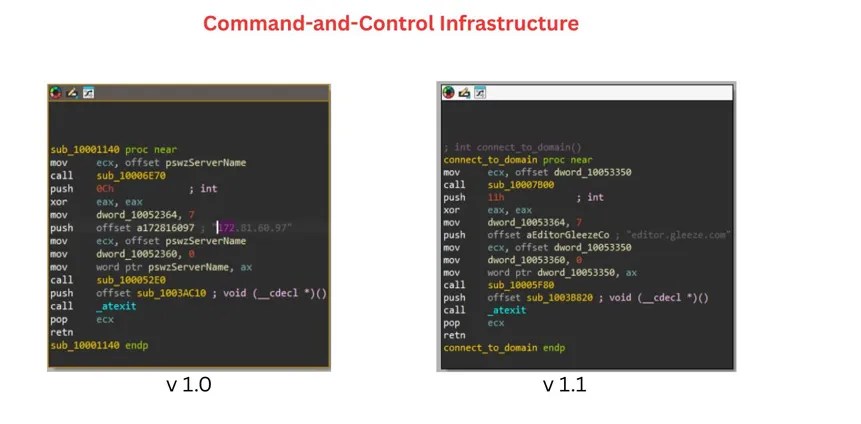
Communication with the Command-and-Control (C2) server is tunneled over encrypted HTTPS traffic to endpoints hosted on dynamic DNS infrastructure (specifically editor[.]gleeze[.]com), a tactic consistent with previous LOTUSLITE iterations. This suggests that rather than developing a brand-new malware family, the actors are performing iterative, tactical upgrades to an existing, proven codebase.
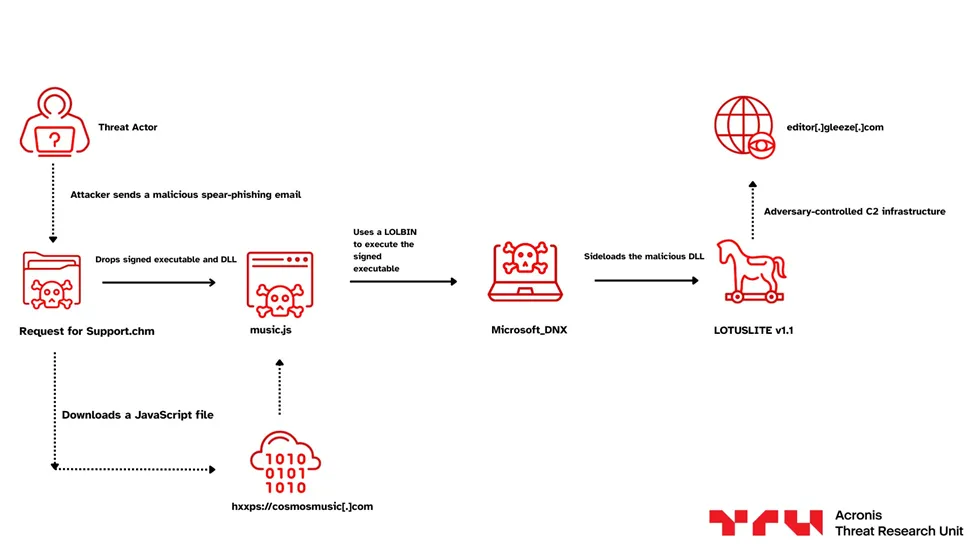
The Acronis Threat Research Unit (TRU) notes that this shift in targetology—moving from U.S. government entities to the Indian banking sector—indicates a codebase under active maintenance, optimized for evasion and operational flexibility.
Technical Breakdown: From CHM Lures to DLL Sideloading
The initial infection vector employs highly targeted spear-phishing. Actors deliver Compiled HTML Help (CHM) files, often using deceptive “support ticket” or “banking request” naming conventions to induce user interaction.
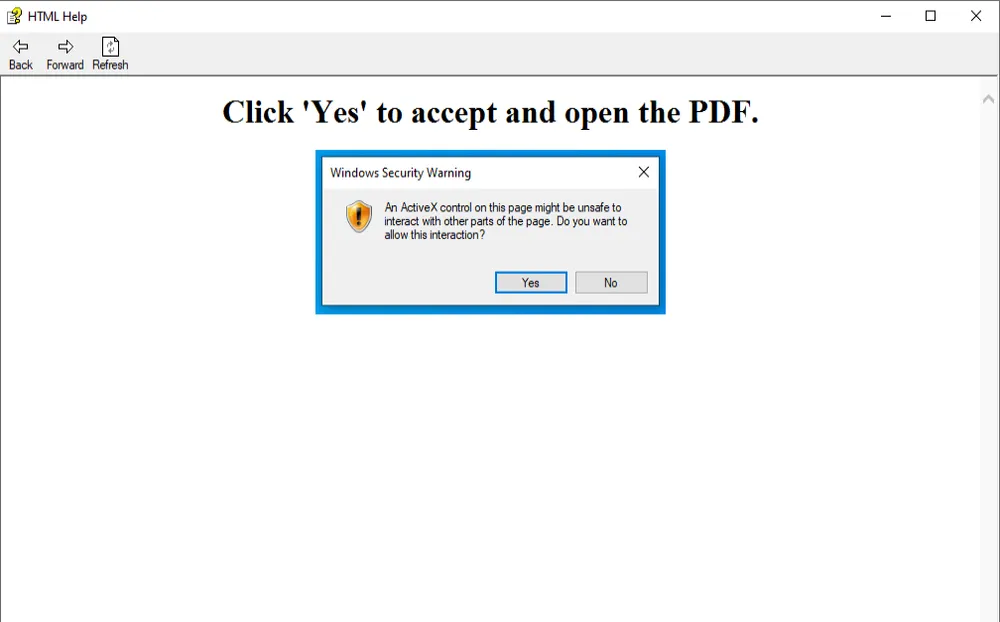
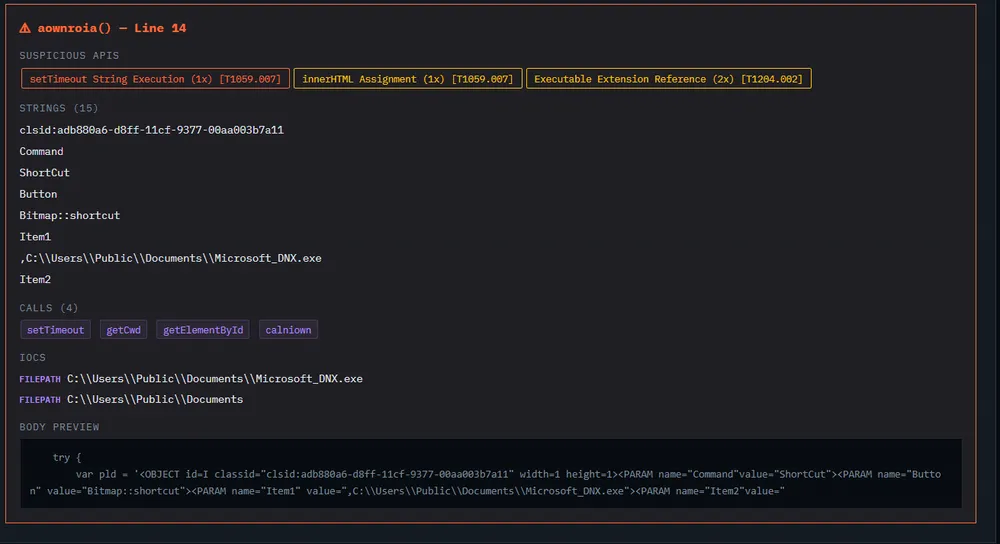
Upon execution, the CHM file exploits ActiveX controls to trigger hh.exe, which decompiles the file to drop a legitimate Microsoft-signed executable (Microsoft_DNX.exe) alongside a malicious DLL into the C:\Users\Public\Documents directory. The entire sequence is orchestrated by a JavaScript loader (often named music.js) which programmatically automates the clicks required to bridge the gap between the CHM and the final payload.
The core of the evasion strategy lies in DLL Sideloading. The trusted Microsoft_DNX.exe binary uses the LoadLibraryExW API to load the malicious DLL from its own directory. By resolving the DnxMain export via GetProcAddress, the attacker gains execution flow while the process appears to the Operating System as a legitimate, signed Microsoft tool.
Deep code analysis reveals significant evolution in v1.1. While the fundamental Type-Length-Value (TLV) packet structure and command IDs remain identical to original LOTUSLITE, the developers have implemented advanced anti-analysis measures:
- Dynamic API Resolution: All sensitive Windows API calls are now resolved at runtime using an
ntdll-basedLdrLoadDllchain. This leaves the Import Address Table (IAT) nearly empty, effectively blinding many static analysis tools. - Export Reorganization: The export table has been restructured. Notably,
DnxMainnow routes execution to a newHDFCBankMainexport, explicitly signaling the malware’s geographic and sectoral focus. - Refined Persistence: Persistence is maintained via a Registry Run key under
HKCU(written throughSHSetValueA), but the logic is now decoupled into dedicated helper functions to reduce the malware’s signature.
Geopolitical Reach: Expanding Victimology
The threat is not confined to India. The LOTUSLITE v1.1 lineage has surfaced in parallel campaigns targeting South Korean and U.S. policy communities. These operations utilize diplomatic-themed lures and sophisticated social engineering, often impersonating high-profile security experts to gain access to Indo-Pacific intelligence.
To evade detection during these multifaceted operations, attackers have implemented minor “magic value” shifts in C2 packets (e.g., changing the marker from 0x8899AABB to 0xB2EBCFDF) and rotated internal operational flags (transitioning from --DATA to --ZoneMAX). This allows the group to reuse the same robust codebase across different theaters of operation without triggering existing IOC (Indicator of Compromise) signatures.
Defensive Recommendations
For security teams in the financial and diplomatic sectors, the LOTUSLITE v1.1 threat requires a shift toward behavioral-based detection. Recommended defensive postures include:
- Monitor Binary-DLL Relationships: Implement strict monitoring for legitimate, digitally signed binaries loading DLLs from non-standard or user-writable directories (e.g.,
\Users\Public\). - Inspect Dynamic DNS Traffic: Alert on HTTPS outbound connections to dynamic DNS providers (like Dynu or Gleeze) originating from unusual system processes.
- Egress Filtering: Watch for unusual packet “magic” values or non-standard protocol headers in outbound telemetry that might indicate custom C2 communication.
Ultimately, LOTUSLITE v1.1 serves as a reminder that even “simple” implants can sustain long-term, high-impact espionage when they are continuously refined to exploit existing trust within the Windows ecosystem.