Technical Analysis: The Sophisticated Tradecraft of the Prinz Eugen Ransomware
Recent forensic investigations have identified a highly targeted ransomware campaign attributed to the Prinz Eugen group. Unlike many “first-wave” ransomware samples that rely on brute-force encryption methods, this new iteration utilizes a purpose-built Go binary characterized by deliberate file targeting, modern cryptographic primitives, and aggressive anti-forensic measures. This combination of traits presents a significant escalation in operational complexity for incident responders.
The intrusion lifecycle typically begins with the exploitation of compromised RDP credentials. Once lateral movement is achieved, the operator deploys the primary encryptor—identified as servertool.exe—often staging it within user-level directories, such as the Music folder, to evade detection. The binary is designed for high-impact execution, accepting specific directory paths and an optional –delete flag via command-line arguments. In observed incidents, the malware was invoked recursively against critical user data, including OneDrive, system directories, and mapped Google Drive paths.
A notable tactical nuance is the binary’s file iteration logic. Rather than traversing directories in a standard chronological or alphabetical order, the sample prioritizes files based on the most-recently modified timestamp. By targeting active documents and recent backups first, the attacker maximizes immediate operational pressure on the victim, forcing a sense of urgency before the defender can implement containment measures.
The encryption workflow is methodical: for every target file, the binary generates a temporary encrypted version named .<original>.prinzeugen.tmp, which is subsequently renamed to <original>.prinzeugen. When the –delete flag is active, the malware performs a validation step via a VerifyEncryptedWithKey function to ensure the integrity of the encrypted output before purging the original cleartext, ensuring a “reliable” destruction of data.
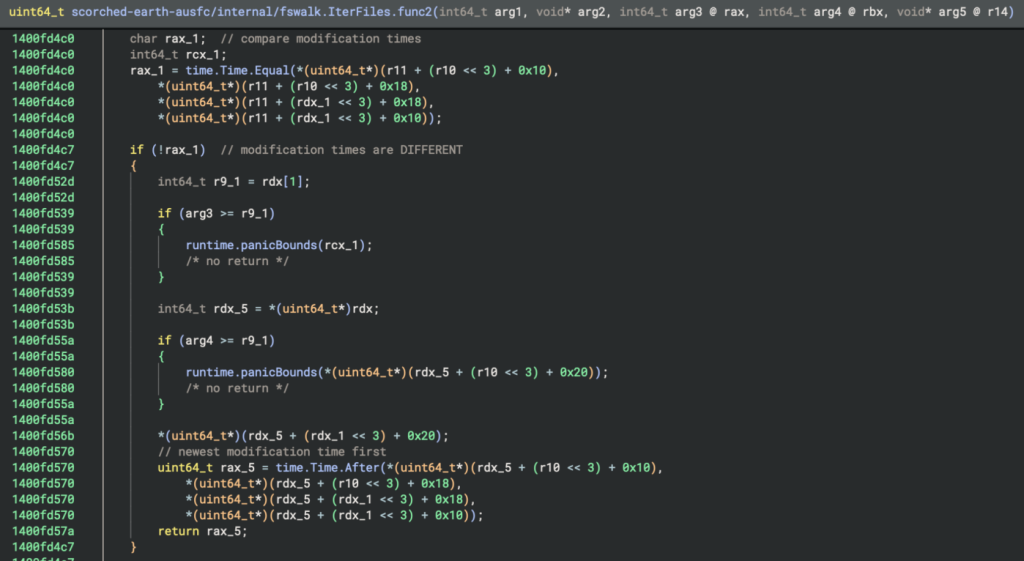
According to ThreatDown technical analysis, the encryptor leverages Go’s concurrency model, spawning worker goroutines—one per CPU core—to handle file operations across three distinct stages. This multi-threaded approach significantly accelerates the encryption process on high-performance systems.
Cryptographic Architecture
The Prinz Eugen sample eschews weaker algorithms in favor of resilient, modern primitives. It utilizes ChaCha20-Poly1305 AEAD, employing a 32-byte master key and unique, per-file random Initialization Vectors (IVs). The key derivation process is a robust three-stage pipeline: Argon2id → SHA-256 → HKDF-SHA256. Encryption is processed in 1 MB chunks, with SHA-256 integrity hashes integrated to detect any unauthorized tampering with the encrypted blobs.
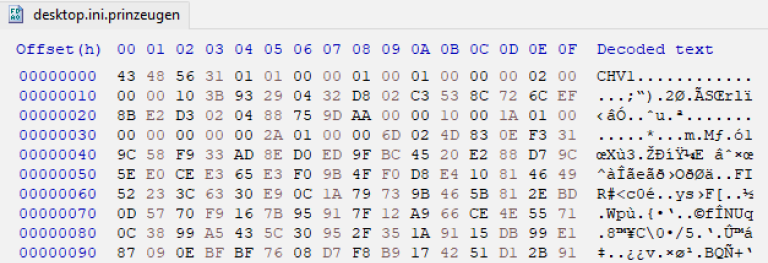
This design effectively mitigates naive recovery attempts, as brute-forcing or offline key recovery is computationally impractical without the master key. Furthermore, the files are marked with a custom CHV1 magic byte header, providing a reliable forensic indicator for attribution.
Anti-Forensics and Extortion Tactics
The binary exhibits sophisticated anti-forensic behaviors designed to complicate post-incident memory analysis. Prior to termination, the malware zeroes out its hardcoded key in memory and triggers a garbage collection cycle to purge residual key material. To evade file-locking mechanisms during deletion, the binary employs a cmd.exe “ping-delay” trick, allowing the process to detach and delete itself without immediate failure.
Interestingly, the sample contains no built-in ransom note functionality. The absence of on-disk text or HTML demands suggests a shift in the attacker’s business model. Combined with reports of a dedicated leak site, this indicates a data-exfiltrate-then-extort strategy, where the primary lever is the threat of public data exposure rather than mere system unavailability.
Attribution is bolstered by the reuse of previous naming conventions. The operator’s handles, such as ROOTBOY and GERMANIA, along with specific package names like scorched-earth-ausfc, link this campaign to earlier extortion activities. Observed post-intrusion activity includes the use of RemotePC for deploying PowerShell stagers and the manual creation of administrative accounts to maintain persistence.
Mitigation and Defense
The impact of Prinz Eugen is broad and opportunistic, with victims ranging from major South African financial institutions to regional European organizations. To defend against this threat, security teams should prioritize the following:
- RDP Hardening: Implement strict credential hygiene, multi-factor authentication (MFA), and limit RDP exposure to VPN-only access.
- RMM Monitoring: Monitor for the unauthorized use of Remote Management and Monitoring (RMM) tools like RemotePC.
- Behavioral Detection: Implement EDR rules to flag anomalous, recursive file access patterns, particularly those targeting files with recent modification timestamps.
- Identity Security: Audit for the sudden creation of new, unauthorized administrative accounts.
Indicators of Compromise (IoCs)
| Indicator | Type | Notes |
|---|---|---|
| 212[.]80[.]7[.]74 | C2 / Payload Host | AS215439, Play2go International, Frankfurt, DE. |
| stndrdbnk[.]cc | Domain | Standard Bank typosquatting. |
| g-captchafestung[.]sbs | Domain | Potential ClickFix/Fake-CAPTCHA vector. |
| festung-e.duckdns[.]org | Domain | Dynamic-DNS host observed in late May. |
Disclaimer: IP addresses and domains are defanged (e.g., [.]) to prevent accidental execution. Re-fang only within controlled environments.