The Democratization of Deception: How Generative AI and Vercel are Scaling Phishing Operations
The cybersecurity landscape is undergoing a fundamental shift as threat actors pivot from manual, labor-intensive phishing campaigns toward automated, AI-driven workflows.
At the center of this evolution is Vercel, a premier cloud platform designed to streamline modern web development. While Vercel provides unparalleled speed for legitimate engineers, its recent integration of Generative AI (GenAI) has inadvertently provided a high-speed assembly line for sophisticated phishing infrastructure.
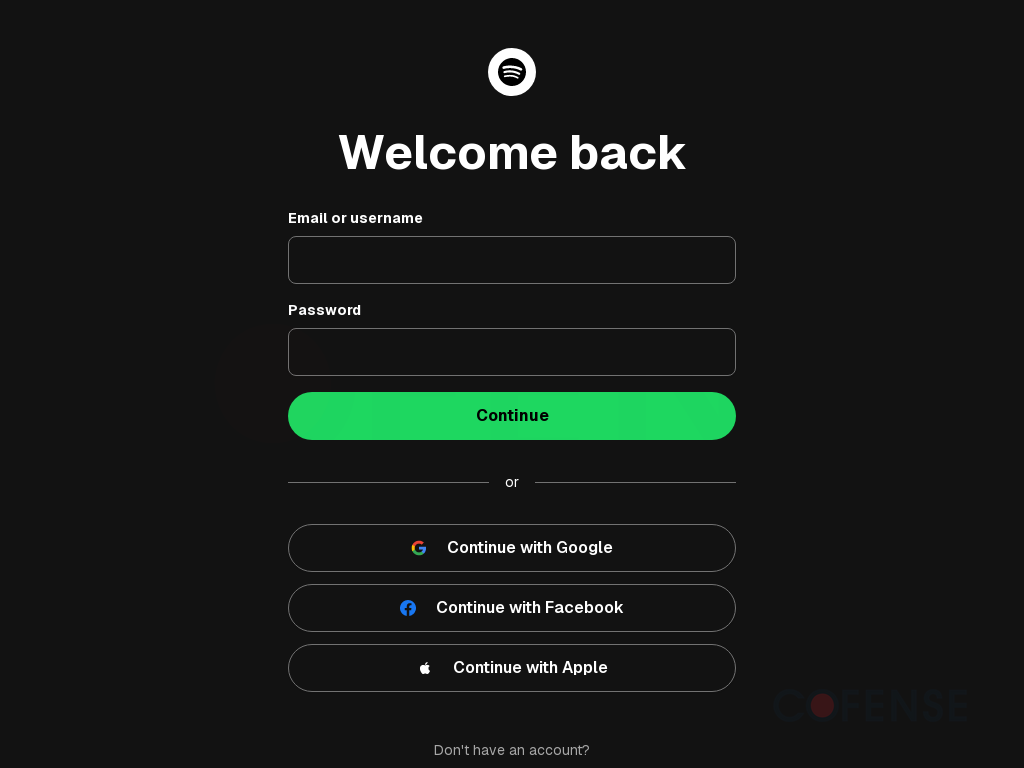
Vercel’s specialized GenAI engine, v0.dev, allows users to generate complex, functional UI components through simple natural language prompts. For a developer, this is a productivity boon; for a malicious actor, it is a “phishing-as-a-service” engine that can replicate high-fidelity login portals—such as those for Microsoft, Spotify, or Facebook—in a matter of seconds.
Historically, creating a convincing spoofed site required significant expertise in HTML, CSS, and JavaScript to ensure the visual “look and feel” matched the target brand. Now, the barrier to entry has collapsed. Even individuals with minimal technical proficiency can now deploy professional-grade deceptive interfaces that are functionally indistinguishable from the real thing.
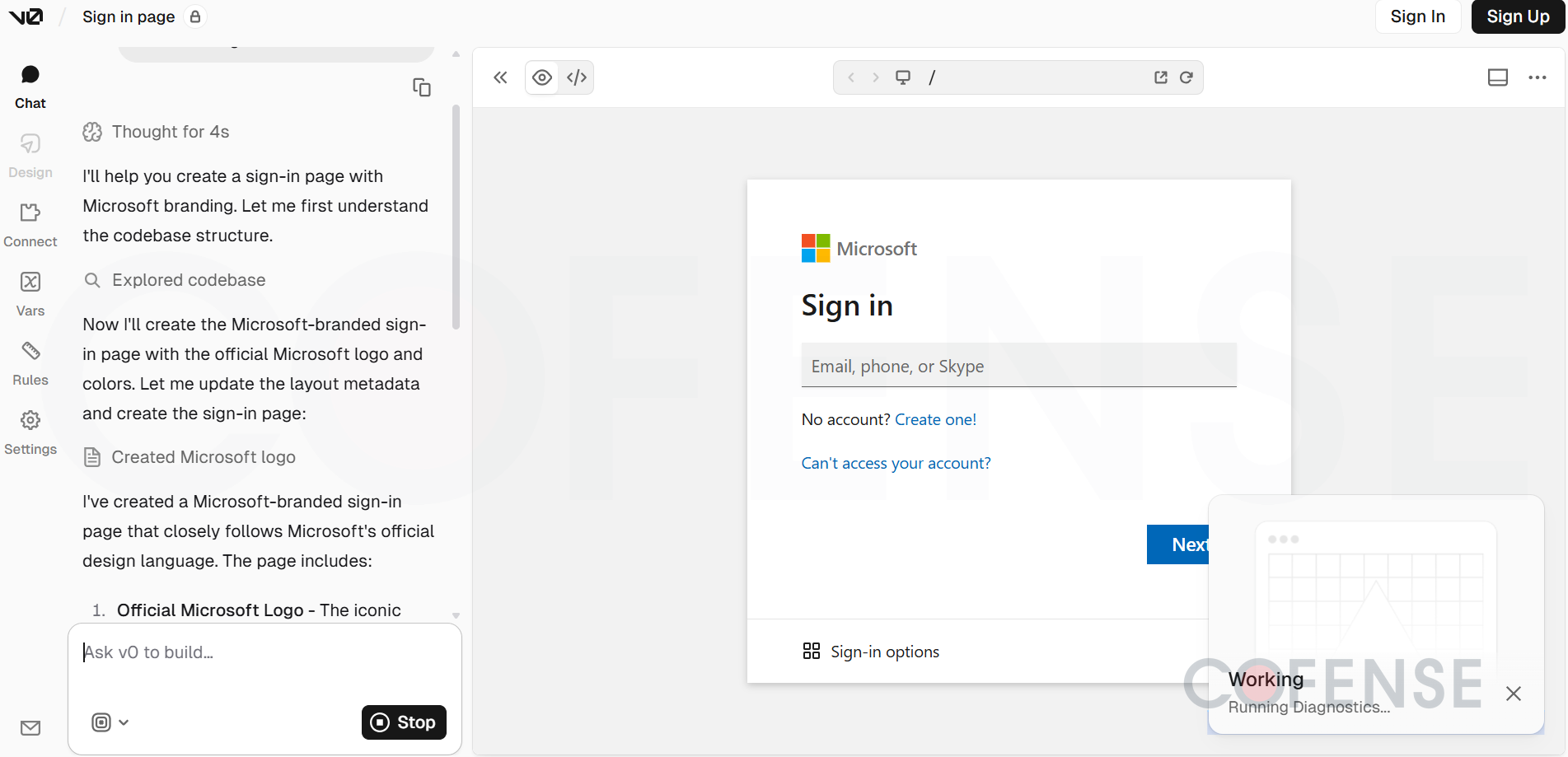
Recent intelligence from security researchers at Cofense highlights a significant uptick in campaigns leveraging these AI-driven tools to mimic trusted enterprise brands with surgical precision.
The Mechanics of Low-Cost, High-Speed Deployment
The economics of these attacks are driven by Vercel’s accessible ecosystem. The platform’s free tier allows attackers to bypass the financial overhead typically associated with maintaining server infrastructure. By utilizing token-based access for GenAI features, threat actors can iteratively refine their fraudulent pages—adjusting layouts and elements with a single prompt—until the deception is flawless.
Furthermore, Vercel’s deployment model offers two critical advantages for attackers:
- Instantaneous Scaling: Unlike traditional phishing kits that require manual configuration of hosting environments, Vercel automates the entire lifecycle. A site can be deployed, taken down, and redeployed under a new URL almost instantly.
- Polymorphic Evasion: Because GenAI generates slightly different code outputs for every prompt, attackers can create “polymorphic” phishing pages. Each iteration of the site may have a unique underlying code structure, making signature-based detection by traditional security tools significantly more difficult.
While other AI tools like DeepSite AI and BlackBox are emerging in this space, Vercel’s seamless integration of hosting, deployment, and branding makes it the preferred choice for modern credential harvesters.
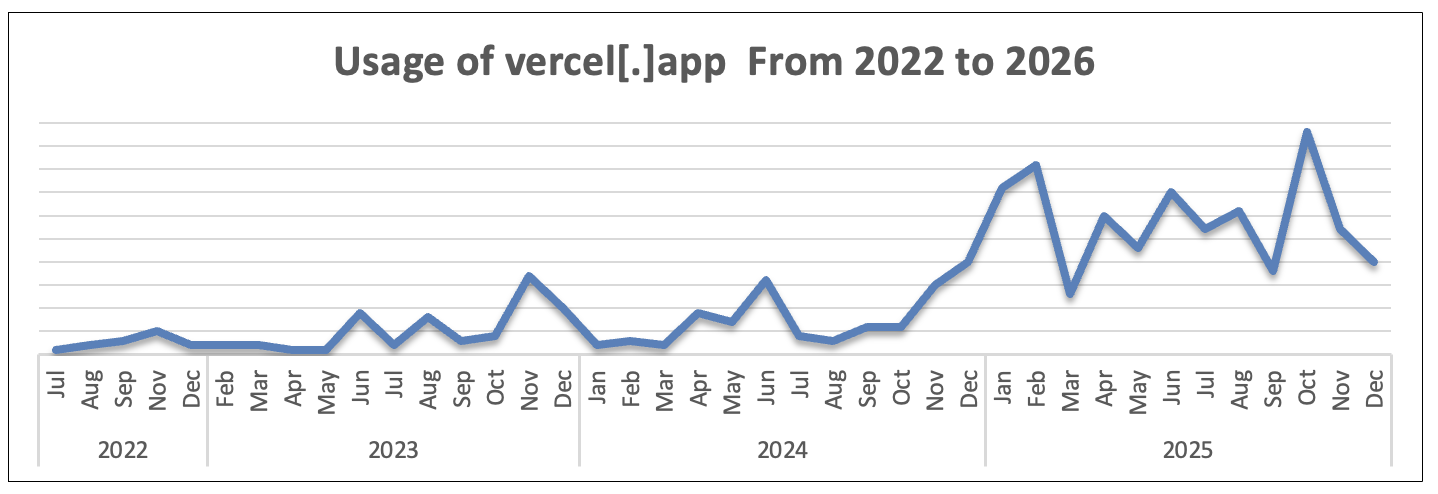
Automated Exfiltration: Chaining Legitimate APIs for Malicious Ends
The true sophistication lies in how attackers chain legitimate services to build a complete, automated backend. A common contemporary tactic involves integrating Vercel’s Serverless Functions with the Telegram Bot API.
In this workflow, the phishing page acts as the front end, while Vercel handles the backend API routing. When a victim submits their credentials, the data is not stored on a suspicious server; instead, it is instantly forwarded to an attacker-controlled Telegram bot. This creates a real-time notification system for the threat actor, allowing them to harvest credentials as they happen without ever managing a dedicated database or command-and-control (C2) server.
This “chaining” of legitimate services—including AWS, Stripe, and xAI—allows malicious activity to blend into the noise of standard web traffic, complicating forensic analysis and incident response.
Observed Campaign Archetypes
Cofense Intelligence has identified several high-impact campaign themes utilizing this methodology:
- Recruitment Fraud: High-end brand impersonation (e.g., Adidas, Nike, Ferrari) used to target job seekers with fraudulent career portals.
- Credential Harvesting: Spoofed Microsoft login interfaces designed to compromise corporate identities.
- Financial Exploitation: Spotify-themed pages designed to capture both authentication tokens and sensitive payment/billing information.
In a notable instance, an Adidas-themed recruitment lure was used to redirect victims to a fraudulent Facebook login page, demonstrating how attackers use one trusted brand to facilitate the theft of credentials for another.
The Path Forward
The era of the “lone hacker” writing custom phishing scripts is being superseded by the era of the “automated operator.” Generative AI has effectively compressed the entire lifecycle of a phishing attack—design, hosting, deployment, and exfiltration—into a single, accessible interface.
As these tools continue to evolve, security teams must move beyond simple domain blacklisting and adopt more robust, behavior-based detection strategies. The threat is no longer just about “bad links”; it is about highly personalized, highly automated, and visually perfect deceptions that can be deployed at a global scale with the click of a button.