The Invisible Conduit: Analyzing the Systemic Proliferation of Residential Proxy Networks
By synthesizing billions of DNS resolutions and associated network telemetry, researchers have gained a granular view of the expanding footprint of residential proxies. This analysis extends beyond simple traffic patterns, uncovering deep-seated risks such as the presence of the Kimwolf Botnet residing within enterprise customer networks.
A longitudinal follow-up analysis of DNS telemetry across the Infoblox Threat Defense Cloud reveals a systemic shift in network behavior: by 2026, more than 65% of our customer base had queried domains fundamentally associated with residential proxy orchestration or access protocols. This phenomenon is driven by a complex ecosystem ranging from legitimate high-scale web scraping and AI model training to more insidious vectors like embedded SDKs, “free” consumer applications, and covert proxyware.
Technically, residential proxies differ significantly from traditional datacenter VPNs or Tor exit nodes. They route traffic through IP addresses assigned to legitimate consumer devices and home routers. By presenting destination servers with ostensibly benign residential IPs, these proxies effectively “launder” the attacker’s origin, bypassing IP-based reputation scoring and undermining sophisticated anti-fraud systems.
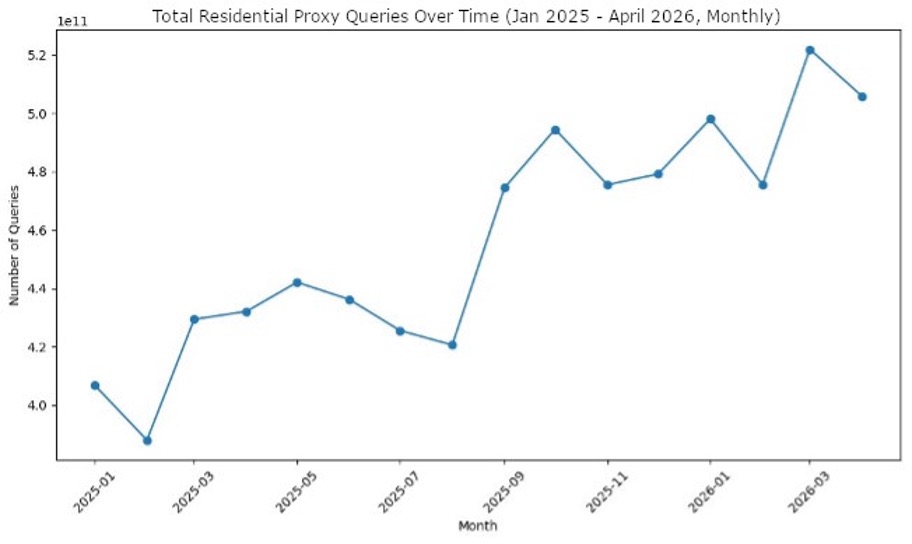
The telemetry indicates that monthly DNS queries to residential proxy domains experienced a sharp upward trajectory, climbing approximately 25% throughout 2025—rising from roughly 400 billion queries to over 500 billion by April 2026. This growth underscores a persistent demand for anonymized access, even in the face of significant industry disruptions, such as Google’s intervention against IPIDEA in early 2026.
The operational risk to the enterprise is two-fold:
1. Network Repurposing: Corporate networks that inadvertently host proxyware effectively provide attackers with a pool of plausible, routable IP space. When these IPs are utilized to launch attacks against third parties, defenders face the costly and time-consuming burden of proving their infrastructure was merely a passive conduit—a scenario that carries significant legal and reputational risk.
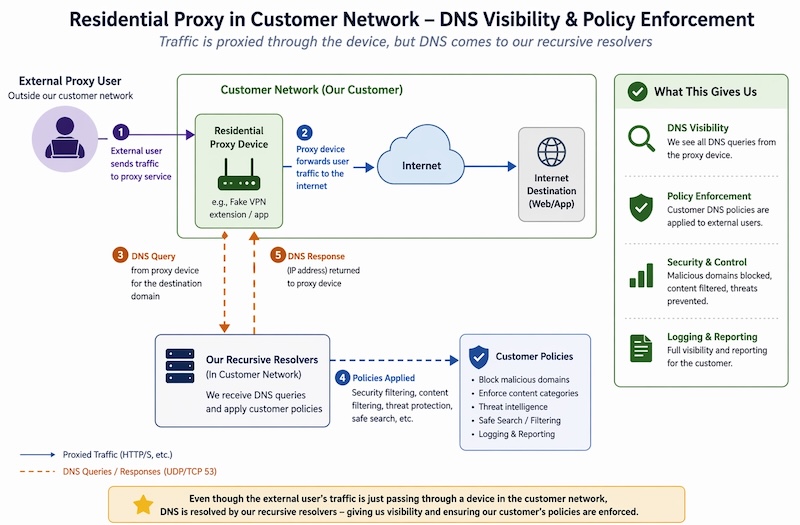
2. Alert Fatigue and Signal Obscuration: Residential proxy traffic frequently interacts with suspicious domains, triggering a deluge of security alerts. Because Infoblox’s recursive resolvers capture queries from both human users and automated devices enrolled in proxy pools, this creates “alert inflation,” where the sheer volume of proxy-related noise obscures actual targeted threats.
Behavioral anomalies in the data further highlight the volatility of these networks. For instance, following the IPIDEA takedown, we observed dramatic spikes in queries to providers like Infatica, with the number of customer networks querying specific IPIDEA domains increasing by over 265% in a single 24-hour period. Such surges indicate highly dynamic reconfiguration and sophisticated fallback mechanisms within proxy-enabling SDKs.
The Anatomy of Proxy Abuse
It is important to note that not all residential proxy usage is overtly malicious. Many legitimate applications monetize through SDKs that compensate users for sharing bandwidth. However, the line is often blurred; proxyware is frequently bundled into low-cost IoT devices, browser extensions, or non-consensual deployments. Well-known services identified across our customer base include Brightdata, Oxylabs, Hola, Honeygain, and Grass (the latter of which has been linked to preinstalled software on certain Android TV devices).
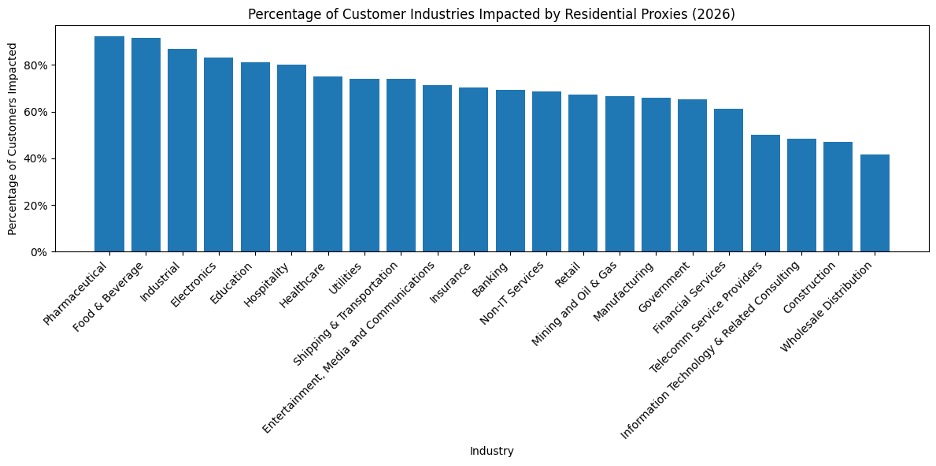
The impact is felt across nearly every sector. Our data shows that over 90% of pharmaceutical and food & beverage organizations, as well as more than 60% of government and banking institutions, have queried proxy-related indicators. This cross-vertical presence proves that residential proxies are a pervasive architectural challenge.
Mitigation Strategies for Defenders:
- Implement Protective DNS (PDNS): Utilize DNS-layer security to proactively detect and block known proxy orchestration domains.
- DNS Log Auditing: Regularly analyze query logs for the specific behavioral patterns and domain indicators associated with proxy pools.
- Endpoint & IoT Inventory: Conduct rigorous audits of installed browser extensions, mobile applications, and IoT fleets to identify embedded, unauthorized SDKs.
- Threat Intelligence Integration: Coordinate with specialized tracking services and threat intelligence providers to determine if your corporate IP space has been ingested into external proxy pools.
Residential proxies are no longer a fringe nuisance; they are a fundamental component of the modern threat landscape. Organizations that combine deep visibility with aggressive policy enforcement will be best positioned to prevent their networks from being repurposed as anonymous infrastructure for malicious actors.