The Trojan Candidate: How Jasper Sleet Infiltrates Cloud Environments via Remote Hiring Exploits
In a sophisticated evolution of social engineering, Microsoft has issued a critical warning regarding Jasper Sleet, a North Korea-aligned threat actor. Unlike traditional breaches that rely on phishing links or unpatched software, this group is weaponizing the globalized remote hiring process. By posing as legitimate IT professionals, these operatives secure “insider” status, allowing them to bypass traditional perimeter defenses and operate from within trusted cloud environments.
The shift toward pandemic-era remote onboarding—characterized by digital identity verification and decentralized hiring—has inadvertently expanded the enterprise attack surface. Jasper Sleet exploits this friction point, utilizing a combination of stolen identities, high-fidelity fabricated credentials, and generative AI-polished resumes to navigate the recruitment pipeline undetected.
Once successfully onboarded, these “phantom employees” serve multiple malicious objectives: generating illicit revenue through payroll diversion, exfiltrating sensitive corporate IP to the regime, or establishing long-term persistence for future extortion campaigns.
The AI-Enhanced Reconnaissance Phase
The exploitation lifecycle begins with systematic reconnaissance. Jasper Sleet operators meticulously scan corporate career portals and public job boards, targeting high-value technical roles in cloud infrastructure and IT operations. To ensure a high success rate during the screening process, the group leverages advanced automation.
According to Microsoft’s threat intelligence, the actors use generative AI at scale to ingest job descriptions and extract specific technical requirements. They then programmatically mirror this precise lexicon in tailored CVs, cover letters, and professional online profiles. This creates a “perfect candidate” profile capable of bypassing both AI-driven Applicant Tracking Systems (ATS) and human recruiter scrutiny.
Exploiting HR SaaS and Workday APIs
Modern enterprises often rely on HR SaaS platforms like Workday to manage global talent. These platforms extend their functionality through public-facing APIs, such as the Recruiting Web Service, to facilitate seamless application processing. Jasper Sleet has turned these convenience features into an automated attack vector.
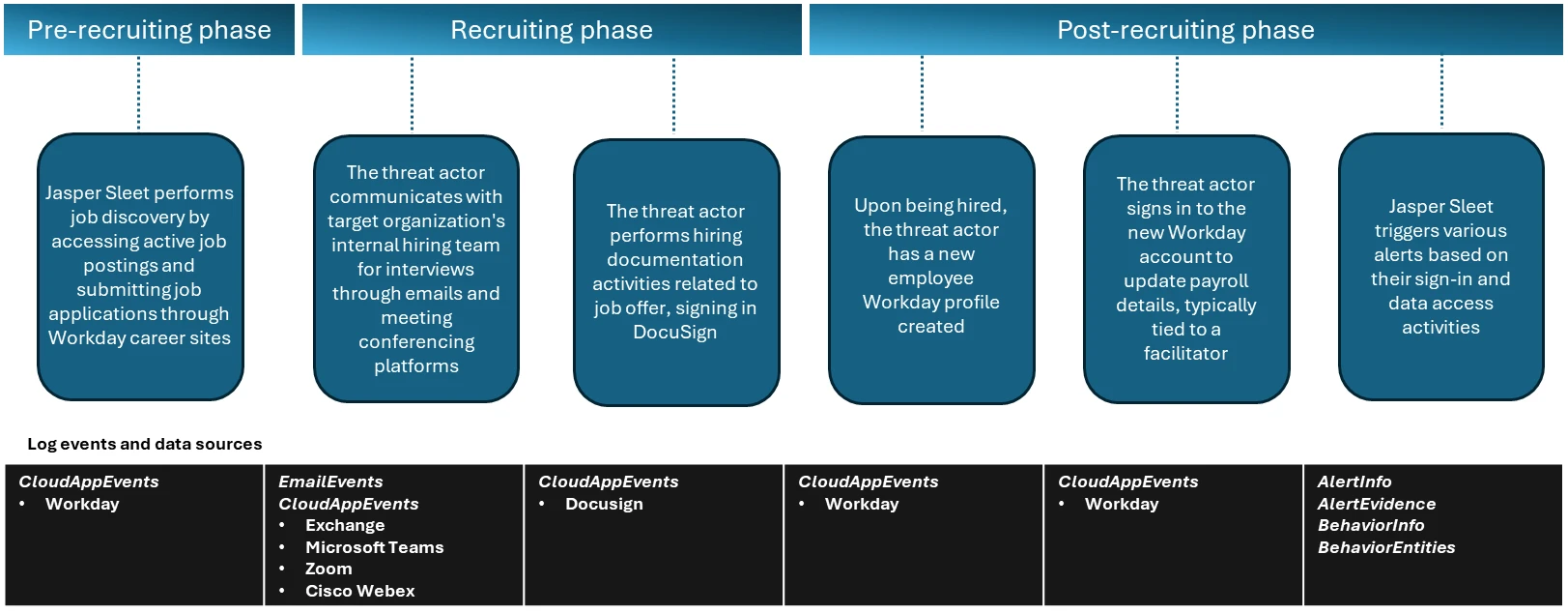
Microsoft has detected Jasper Sleet infrastructure making high-frequency calls to Workday hrrecruiting APIs. The actors use these endpoints to enumerate available roles, scrape complex application questionnaires, and submit bulk application packages. While this behavior can mimic legitimate high-volume recruitment periods, the tactical signature of the attackers reveals itself through the use of multiple disparate external accounts performing synchronized, repetitive API patterns at an inhuman scale.
After penetrating the initial recruitment phase, the actors transition to interactive social engineering, engaging with hiring managers via standard enterprise communication tools like Microsoft Teams, Zoom, or Webex to finalize their infiltration.
Defense Strategy: To mitigate this, organizations should implement Microsoft Defender advanced hunting and utilize Defender for Cloud Apps connectors for Workday, Zoom, and DocuSign. This allows security teams to monitor for suspicious external accounts, interview traffic originating from high-risk IP ranges, and anomalous document-signing patterns during the onboarding window.
Post-Onboarding: Detecting the Phantom Employee
The danger escalates once the “employee” is granted legitimate corporate identities and access to the SaaS ecosystem (SharePoint, OneDrive, Exchange Online). At this stage, the threat shifts from recruitment fraud to active data exfiltration and identity abuse.
Microsoft has documented several key post-hire indicators of compromise (IoCs):
- Payroll Manipulation: Newly hired personas logging into Workday from known actor-controlled infrastructure and immediately attempting to alter bank routing details.
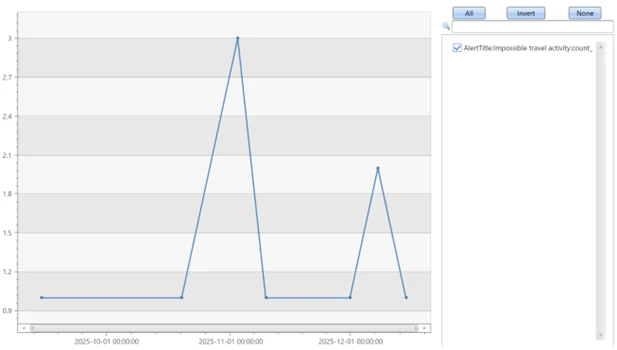
- Impossible Travel: Sudden spikes in “impossible travel” alerts where a new hire’s credentials appear to be used from geographically distant, anonymous proxy locations shortly after their first login.
- Data Discovery Spikes: Anomalous search and download patterns across Microsoft 365 environments, signaling the actor is mapping the corporate data landscape.
Strategic Recommendations for Zero Trust Onboarding
The Jasper Sleet campaign underscores a critical reality: the HR department is now a primary component of the security perimeter. To defend against this evolving threat, organizations must adopt a holistic approach to identity verification.
- Unify Telemetry: Integrate HR software telemetry with Security Operations Center (SOC) monitoring. Treat “New Hire” status as a period of heightened risk.
- Leverage Microsoft Defender XDR: Utilize automated detection for impossible travel and suspicious sign-ins specifically correlated with recent onboarding events.
- Strengthen Identity Verification: Move beyond digital-only verification. Implement rigorous, multi-factor identity validation for remote contractors.
- Cross-Departmental Training: Train both HR and IT teams to recognize the social engineering red flags and the technical signatures of AI-generated identity fraud.
By treating recruiting and onboarding as integral parts of the digital attack surface, enterprises can close the gap that Jasper Sleet and similar actors are currently exploiting.