Deep Dive: The Mr_Rot13 Syndicate Exploiting Critical cPanel Authentication Bypass (CVE-2026-41940)
A high-impact authentication bypass vulnerability, cataloged as CVE-2026-41940, is currently being weaponized by a highly disciplined and elusive threat actor known as Mr_Rot13. This vulnerability specifically targets cPanel and WebHost Manager (WHM) environments, posing a catastrophic risk to Linux-based hosting infrastructures.
With a critical CVSS v3.1 score of 9.8, the flaw allows unauthenticated remote attackers to circumvent standard security handshakes, granting them full administrative (root) privileges over the target system. Technical analysis from XLab suggests that Mr_Rot13 is not a typical opportunistic group; they have maintained a near-invisible footprint for over six years, consistently evading detection by major EDR and antivirus solutions.
The current campaign is characterized by the deployment of sophisticated Go-based payload injectors designed to establish deep persistence and comprehensive remote command-and-control (C2) capabilities within virtual host management ecosystems.
Anatomy of the Attack: Targeting cPanel and WHM
Since the vulnerability’s public disclosure in late April 2026, automated exploitation attempts have surged, with global monitoring systems identifying traffic originating from more than 2,000 unique IP addresses. The real-world impact of this campaign is already evident; Ctrl-Alt-Intel reported a major breach in early May, where attackers successfully breached Southeast Asian government and military networks, exfiltrating approximately 4 gigabytes of sensitive intelligence.

The Mr_Rot13 attack chain follows a methodical sequence:
- Payload Delivery: A custom Go-compiled infector is pulled from a remote server and executed in the background to minimize system noise.
- Privilege Hardening: The infector modifies root system passwords and implants unauthorized SSH public keys (labeled as
cpanel-updater) to facilitate easy, legitimate-looking re-entry. - Redundancy: A Python-based webshell is dropped to ensure that if the primary backdoor is discovered, administrative access remains available via a secondary vector.
Interestingly, XLab researchers noted that the payload’s structure suggests a hybrid development approach, potentially incorporating AI-generated code segments. Furthermore, the presence of extensive Turkish-language log outputs during execution provides a unique forensic fingerprint for investigators.
To target human administrators, the group modifies server template files to inject malicious JavaScript into the cPanel login interface. This “Man-in-the-Browser” style attack intercepts user credentials, user-agent strings, and active session tokens in real-time.
Exfiltration is highly agile; stolen data is sent either to obfuscated domains utilizing the ROT13 cipher or directly to a dedicated Telegram bot. The group demonstrates high operational security (OPSEC) by rotating Telegram bot tokens immediately if they detect security researchers probing their infrastructure.
Long-term Persistence: The ‘filemanager’ Trojan
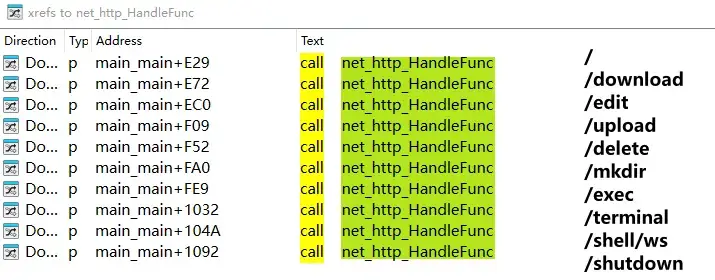
To ensure long-term, unrestricted access, the syndicate deploys a cross-platform Trojan dubbed filemanager. This is a statically linked executable that listens on specific ports, providing a web-based GUI for file management, remote command execution, and direct shell access.
XLab research confirms that this bespoke Trojan utilizes bcrypt cryptographic hashing for its own authentication process. By rejecting plaintext password transmissions, the attackers effectively neutralize standard network sniffing tools that might otherwise intercept administrative credentials.
Forensic tracing has linked the current C2 infrastructure to a previously “invisible” PHP backdoor first seen in 2022. That original malware targeted WordPress installations using complex XOR-based string concatenation to hide its communication routines. The reuse of these domains and encoding techniques confirms that Mr_Rot13 is a highly disciplined, long-term cyber espionage or organized crime entity focused on enterprise-level infiltration.
Indicators of Compromise (IOCs)
MD5 Hashes
2286f126ab4740ccf2595ad1fa0c615c *help.php
2de27ca8d97124adaf604b18161a441e *Update
29222f5e73dd10088fcf1204aa21f87f *Update
fb1bc3f935fdeb3555465070ba2db33c *Update
45fc93426cf08f91c9f9de5f04a12263 *filemanager-darwin-amd64
711afb014f64c97d7b31685709c34ce7 *filemanager-darwin-arm64
22613c952459e65ce09fb6b5c1c03d47 *filemanager-linux-386
9305b4ebbb4d39907cf36b62989a6af3 *filemanager-linux-amd64
e49f68a363c867608972680799389daf *filemanager-linux-arm64
e1ec6ebb96cf87c785ee6a7da677c059 *filemanager-linux-armv7
02a5990b11293236e01f174f5999df20 *filemanager-windows-386.exe_
bae1f1bce7c82fa86f05b12e2e254cfc *filemanager-windows-amd64.exe_
Command & Control (C2)
wrned[.]comDisclaimer: IP addresses and domains have been defanged (e.g., [.]). These should only be re-fanged within controlled environments such as MISP, VirusTotal, or a local SIEM for threat hunting purposes.