The Emergence of Okta Vishing: Identity-Centric Cloud Attacks on the Rise
Hackers are increasingly abandoning email phishing in favor of a more sophisticated threat vector: voice-based social engineering targeting identity platforms like Okta. Dubbed “Okta vishing,” this technique transforms single-account compromises into organization-wide cloud breaches through centralized Single Sign-On (SSO) systems.
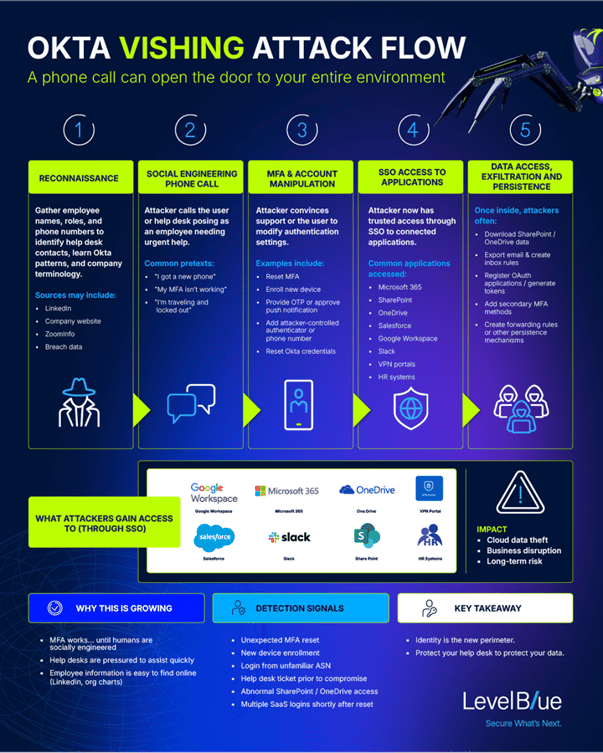
Unlike traditional phishing that relies on malicious links, attackers conduct live calls where they guide victims through actions that grant unauthorized access to the identity provider. These manipulative requests involve pressuring staff to reset MFA, enroll attacker-controlled authenticators, share OTP codes, approve push notifications, or divulge passwords – effectively bypassing technical security controls by exploiting human trust.
How Okta Vishing Escalates to Cloud Breaches
Once identity provider access is compromised, attackers leverage SSO to pivot directly into critical cloud services including Microsoft 365, Google Workspace, Salesforce, and Slack. This SSO backbone enables rapid data exfiltration – downloading SharePoint files, exporting emails, creating API tokens, and establishing unauthorized mail forwarding within minutes of compromise.
Why Identity Social Engineering Succeeds
Threat actors exploit fundamental organizational vulnerabilities: MFA typically fails at the human layer, not the technical layer. Help desks – pressured for quick resolutions – become prime targets, especially as remote work increases authentication challenges. Attackers craft credible pretexts using publicly available employee data from LinkedIn, corporate sites, and breach databases to impersonate executives, contractors, or “locked-out users” with urgency-based tactics.
Compromising identity providers like Okta effectively grants attackers master keys to the entire cloud ecosystem. When Okta falls, every SaaS application behind it becomes accessible without individual platform exploitation.
Detection Signs for Security Teams
Identity administrators should monitor for:
- Unexplained MFA resets or new authenticator enrollments
- Help desk tickets preceding sign-ins from unfamiliar ASNs (Autonomous System Numbers)
- Significant SharePoint/OneDrive download spikes post-MFA changes
- Cross-application logins from new IP addresses
- Sudden OAuth consent events or API token creation
Essential Defense Strategies
Protecting against Okta vishing requires a hardened identity security posture:
- Strict verification protocols: Mandatory multi-step validation for all MFA resets and password changes
- Phishing-resistant MFA: Implement FIDO2 keys or passkeys where available
- Legacy authentication closure: Disable outdated protocols to eliminate weak entry points
- OAuth hardening: Restrict app consent capabilities and require admin approval
- SIEM integration: Correlate identity logs with SaaS, VPN, and endpoint telemetry
Incident response playbooks must explicitly cover identity attacks, with procedures to rapidly revoke sessions, reset credentials, and remove rogue MFA methods upon detection. Regular MFA factor audits and help desk anti-vishing training remain critical human-focused defenses.