The EtherRAT Campaign: Exploiting SEO Poisoning and Blockchain Resilience to Target High-Privilege Identities
A sophisticated new cyber threat, dubbed “EtherRAT,” is currently traversing enterprise environments, signaling a shift toward highly targeted, infrastructure-resilient malware operations.
Rather than pursuing broad, low-value targets, this campaign specifically engineers its delivery to compromise high-privilege IT professionals, leveraging a combination of SEO poisoning, GitHub-based “facade” repositories, and decentralized blockchain technology for Command and Control (C2).
By impersonating the very tools administrators rely on for system maintenance, the threat actors are effectively turning a professional’s toolkit into a vector for deep network penetration.
The Attack Chain: From Search Results to Malicious Payloads
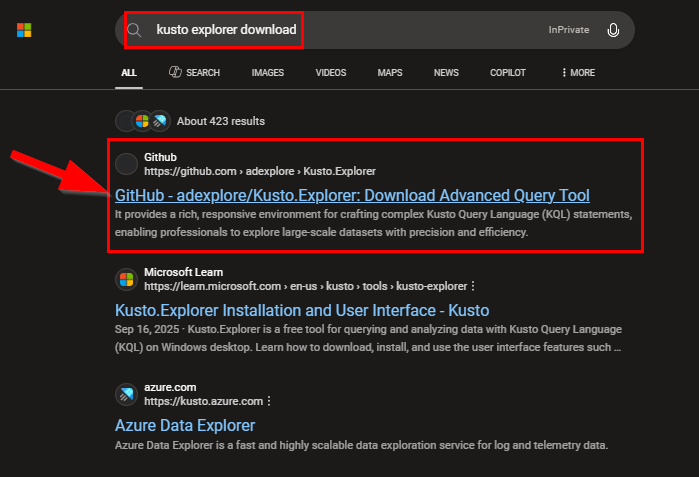
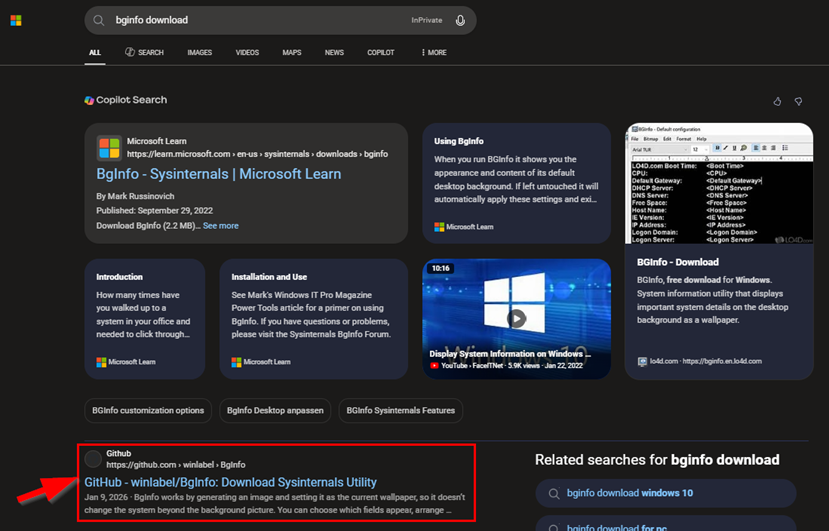
The infection lifecycle begins not with a phishing email, but with a standard web search. Threat actors have successfully manipulated search engine algorithms—specifically targeting Bing, Yahoo, DuckDuckGo, and Yandex—to ensure that malicious GitHub repositories appear at the top of search results for mission-critical queries. Search terms like “Kusto Explorer download” or “Sysmon tool” are being intercepted by these fraudulent entries.
The brilliance (and danger) of this method lies in its two-stage architectural design:
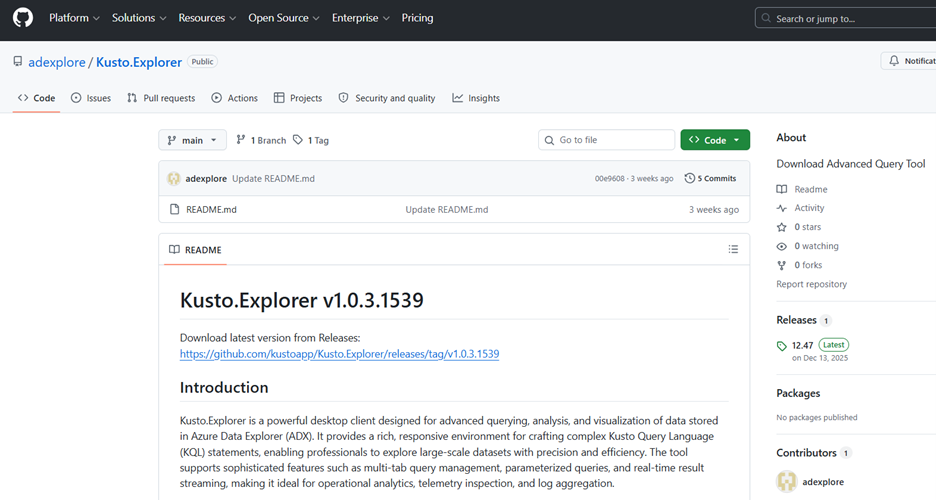
- The Facade: The initial GitHub repository is technically “clean.” It contains legitimate-looking documentation and instructions but carries no malicious code. This prevents immediate detection by automated scanners and builds psychological trust with the user.
- The Payload: The documentation within the facade repository directs users via README links to a second, hidden GitHub repository. This secondary location hosts the actual malicious MSI installer.
Discovered by the Atos Threat Research Center (TRC) in March 2026, this dual-stage setup provides remarkable operational resilience. If security teams identify and take down the payload repository, the SEO-ranked “facade” remains intact, allowing attackers to quickly swap in a new payload without losing their search engine visibility.
Strategic Victim Profiling: Targeting the “Keys to the Kingdom”
EtherRAT is a masterclass in built-in victim profiling. By impersonating specialized administrative utilities—such as PsExec, AzCopy, Sysmon, LAPS, and WinDbg—the attackers ensure that anyone who downloads the file is almost certainly a user with elevated system privileges. A successful execution doesn’t just compromise a workstation; it provides the attacker with the high-level access required for lateral movement across an enterprise.
For example, an engineer searching for Kusto Explorer (a vital tool for querying Azure Data Explorer via KQL) is led to a seemingly professional storefront. This exploit of trust targets the professional’s workflow, making the malware feel like a routine part of their daily operations.
Technical Deep Dive: Execution and Fileless Persistence
Once the MSI installer is executed, the malware initiates a multi-stage, fileless-style deployment. The process is highly obfuscated to evade traditional Endpoint Detection and Response (EDR) systems:
- Initialization: An obfuscated batch script installs Node.js, which acts as the runtime environment for the subsequent stages.
- Decryption: Subsequent payloads are decrypted in memory using AES-256 encryption, ensuring that the malicious strings never touch the disk in a readable format.
- Persistence: The threat actor maintains a foothold via Windows registry Run keys.
- Stealth: To blend into the noise of a standard Windows environment, the RAT operates under the guise of legitimate system processes, such as
conhost.exe.
The Blockchain C2 Revolution
The most innovative—and difficult to defend against—aspect of EtherRAT is its use of the Ethereum blockchain for Command and Control (C2) communications. Unlike traditional malware that relies on hardcoded IP addresses or domains that can be blacklisted, EtherRAT utilizes smart contracts.
The malware queries a smart contract on the Ethereum network via public RPC endpoints to retrieve the current C2 address. This provides two massive advantages to the attacker:
- Infrastructure Immunity: There is no fixed domain or IP address for defenders to block.
- Dynamic Agility: An attacker can redirect an entire global botnet to a new C2 server simply by executing a single blockchain transaction.
Because these transactions occur on a decentralized, public ledger, traditional “takedown” requests to hosting providers are entirely ineffective.
Attribution and the Evolving Threat Landscape
The scale of this operation is significant. Atos researchers have identified at least 44 distinct malicious GitHub facade repositories active between December 2025 and April 2026. While definitive attribution is still ongoing, researchers have noted tactical overlaps with advanced persistent threat (APT) groups, including Lazarus (North Korea) and MuddyWater (Iran).
Unlike “smash-and-grab” malware, EtherRAT is designed for long-term espionage. After the initial compromise, the malware performs quiet, low-noise reconnaissance to avoid triggering behavioral alerts. This patience allows attackers to map out critical network assets before moving toward their ultimate objective.
Defensive Recommendations:
- Source Verification: Enforce strict policies requiring software to be downloaded only from official, verified vendor portals rather than general search engines.
- Principle of Least Privilege (PoLP): Limit the number of users with local administrative rights to reduce the impact of a successful credential or tool compromise.
- Network Monitoring: Monitor for unusual outbound traffic to public blockchain RPC endpoints or unexpected Node.js activity on administrative workstations.
The EtherRAT campaign serves as a stark reminder that as our defense mechanisms improve, attackers will increasingly turn to decentralized and highly trusted platforms to bypass them.